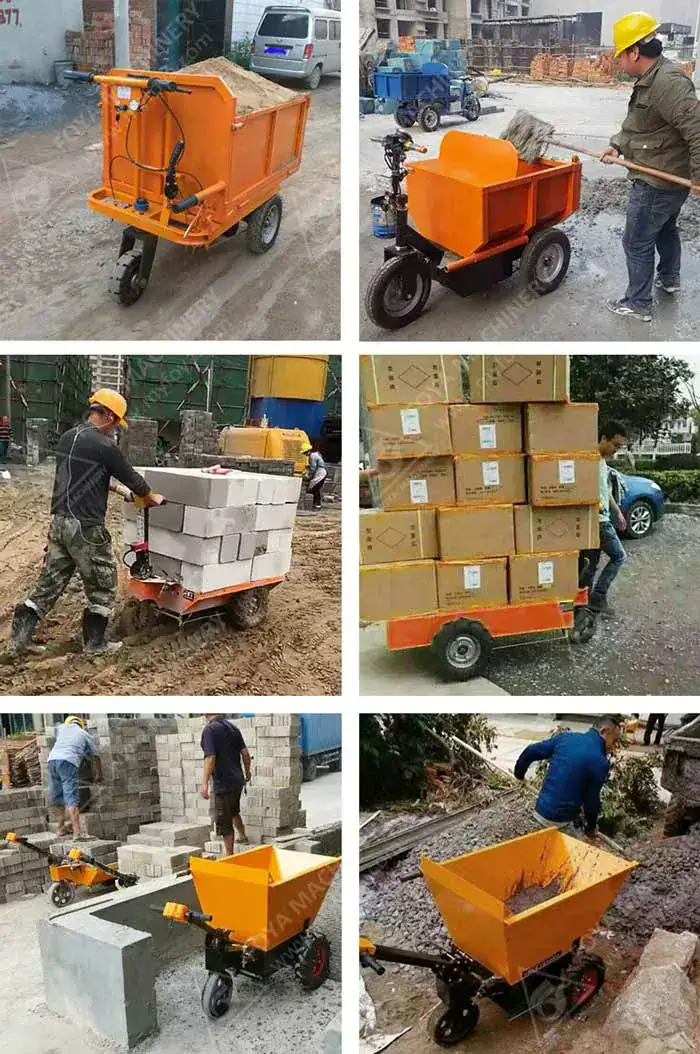
An electric trolley is one of the fastest ways to cut the physical strain of moving heavy loads around a job site, warehouse, or farm. Instead of pushing a manual wheelbarrow and loading all the effort on your arms and back, a battery-powered trolley carries the load for you over gravel, ramps, mud, and walkways. From compact electric wheelbarrows moving sand and cement to platform carts shifting boxes and feed bags, choosing the right machine comes down to load capacity, drive type, terrain, and battery runtime. This guide covers the main types, how to match capacity, and what you should expect to pay in 2026.
How an Electric Trolley Works
At its core, an electric trolley is a manual barrow or cart with a battery-powered motor driving the wheels. A throttle handle lets you control forward and reverse speed, while a brake protects you on slopes. The motor drives one or both wheels, so you guide the trolley rather than lugging it. Most models include a foot rest, a braking system, and a removable or built-in battery that can be charged overnight or swapped for a spare.
Key components to check when comparing models:
- Drive motor — brushless motors last longer and need less maintenance than brushed types
- Battery — lithium-ion (lighter, longer life) or lead-acid (cheaper, heavier)
- Tub or platform — tipping hopper for loose materials, or a flat deck for stacked goods
- Wheel type — wide pneumatic tyres for mud and gravel, solid/polyurethane wheels for smooth floors
- Throttle and brake — variable speed control plus a reliable braking system for slopes
- Capacity rating — the maximum safe load the trolley is designed to carry
Electric Wheelbarrow vs Platform Trolley
| Feature | Electric Wheelbarrow / Power Buggy | Electric Platform / Flatbed Trolley |
|---|---|---|
| Carry deck | Single front hopper or tub (tipping) | Flat open deck or low bed |
| Best materials | Sand, cement, soil, bricks, aggregates | Boxes, pallets, feed, tools, equipment |
| Typical capacity | 200-700 kg | 300-1000 kg |
| Terrain | Rough sites, gravel, mud | Smooth floors, ramps, concrete |
| Common use | Construction, landscaping | Warehouse, factory, farm |
Many contractors start with an electric wheelbarrow for on-site materials, then add a platform trolley for goods handling. If you mainly move loose building materials outdoors, pick a power buggy with a tipping tub and chunky tyres. If you move boxes and stacked goods on smooth floors, a platform trolley is more practical.
Load Capacity and Motor Power
Capacity is the single most important spec. Under-rated trolleys strain the motor and battery and wear out fast; over-sized models cost more than you need. A good rule is to choose a rated capacity about 25-30% above your heaviest typical load.
| Trolley Class | Load Capacity | Motor Power | Typical Use |
|---|---|---|---|
| Compact wheelbarrow | 200-400 kg | 350-650 W | DIY, garden, light building sites |
| Mid-size power buggy | 400-700 kg | 650-1000 W | Construction, landscaping crews |
| Platform / flatbed cart | 500-1000 kg | 800-1500 W | Warehouse, factory, farm handling |
Also check the max grade the trolley can climb when loaded. If your site has ramps or slopes, pick a model with enough torque and a strong brake. A trolley rated for a 15-25% incline suits most construction and farm conditions.
Battery, Runtime and Charging
| Battery Type | Capacity | Typical Runtime | Pros / Cons |
|---|---|---|---|
| Lead-acid | 12-24 Ah | 1.5-3 hours | Cheapest, heavier, shorter life |
| Lithium-ion | 15-30 Ah | 3-6 hours | Lighter, longer life, faster charge |
| Dual / spare pack | 2 x 20-30 Ah | 5-8 hours (swapped) | Full-shift work, best flexibility |
For daily all-day use, choose a lithium-ion battery with at least 20 Ah, or buy a second pack and rotate. Check the charger voltage and buy a spare if you cannot afford downtime while charging mid-shift.
2026 Electric Trolley Price Guide
| Trolley Type | Capacity | Price Range (USD) |
|---|---|---|
| Compact electric wheelbarrow | 200-300 kg | $350 - $800 |
| Mid-size power buggy | 400-700 kg | $800 - $2,200 |
| Platform / flatbed cart | 500-700 kg | $900 - $2,000 |
| Heavy-duty dumper / 1000 kg cart | 700-1000 kg | $2,500 - $6,000+ |
FOYA electric trolleys are built for reliable everyday use with brushless motors, quality lithium-ion batteries, and capacity options from compact site wheelbarrows to heavy-duty handling carts. Factory-direct pricing keeps costs competitive, and our team can help you match capacity, battery, and wheel type to your site.
Frequently Asked Questions
How much weight can an electric trolley carry?
What is the difference between an electric wheelbarrow and an electric platform trolley?
How long does an electric trolley battery last on a single charge?
How much does an electric trolley cost in 2026?
Where is an electric trolley most useful?
Ready to Buy an Electric Trolley?
FOYA Machinery offers electric trolleys from compact site wheelbarrows to heavy-duty platform carts, built with brushless motors and reliable batteries for everyday material handling. Contact our team for help choosing the right capacity, wheel type, and battery setup for your construction, warehouse, or farm operation.
Also explore: Electric Trolley product page | Steel Bar Bender | Power Trowel