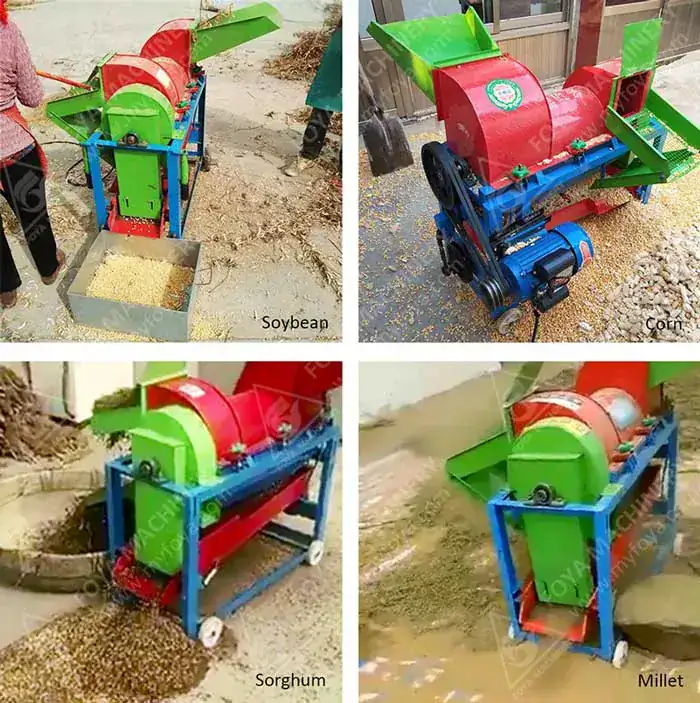
After the grain is harvested and dried, many farmers still face a slow, monotonous task: removing kernels from cobs, pods, or husks by hand. A grain sheller turns this bottleneck into a fast, reliable process, shelling corn, beans, rice, and other pulses in a fraction of the time. For small farms, cooperatives, and feed producers, choosing the right shelling machine has a direct impact on labor costs and on-farm profitability.
This guide walks through everything you need to know before buying a grain sheller: how shelling machines work, single-crop vs multi-crop designs, manual vs motorized vs diesel models, built-in cleaning separators, capacity selection by farm scale, and realistic 2026 pricing across machine classes.
How a Grain Sheller Works
A grain sheller uses a rotating drum or rotor fitted with rows of pegs, rasp bars, or friction plates to beat and rub the crop, separating the kernel from the cobs or pods. The shelled material then passes over a sieving screen where kernels drop through, while cobs, husks, and larger debris are carried out through a separate discharge chute.
Key components include:
- Shelling drum — rotating rotor with pegs or rasp bars, speed adjustable for different crops
- Concave screen — perforated grate that holds cobs while allowing kernels to fall through
- Separator sieve — oscillating screen that grades kernels by size and removes chaff
- Cleaning fan / cyclone — optional air system that blows away lightweight husks and dust
- Feed hopper — gravity or conveyor-feed intake for whole cobs or pods
- Discharge outlets — separate spouts for shelled grain and waste material
Single-Crop vs Multi-Crop Shellers
The most important buying decision is whether you need a machine for one crop or several. A single-crop sheller is cheaper and simpler, but locks you into that crop alone. A multi-crop sheller (sometimes called a universal sheller) can handle corn, beans, soybeans, peas, and other pulses by swapping sieve screens and adjusting drum speed.
| Feature | Single-Crop Sheller | Multi-Crop Sheller |
|---|---|---|
| Coverage | One crop (e.g., corn only) | Corn, beans, soybeans, peas, pulses |
| Changeover | Not needed | Swap screen + adjust speed (10-20 min) |
| Typical Price | Lower (base machine) | 20-40% higher |
| Best For | Farms growing one grain | Diversified farms, custom services |
| Spare Parts | Simple, cheap | More screens and settings |
FOYA multi-crop grain shellers include the base machine, three interchangeable sieve screens (corn, soybean, and bean sizes), and a speed-adjustment chart printed on the frame so operators can switch crops without guessing.
Manual vs Motorized vs Diesel Shellers
| Feature | Hand-Crank (Manual) | Electric Motor | Diesel Engine |
|---|---|---|---|
| Capacity | 30-100 kg/h | 300-3000 kg/h | 1000-3000 kg/h |
| Power Source | Manual labor | 110V/220V/380V grid | Portable fuel |
| Best For | Households, micro-farms | Farms with grid power | Remote fields, no electricity |
| Operating Cost | Labor only | Low ($0.05-$0.20/h) | Moderate ($1-$2.50/h) |
| Maintenance | Minimal | Low — simple motor | Higher — engine service |
| One-Pass Cleaning? | No (separate screening) | Yes (with separator) | Yes (with separator) |
For most small to medium farms with access to electricity, an electric grain sheller with a built-in separator delivers the best value — it shells and cleans in one pass with minimal operating cost. Diesel models are worth the extra cost for farms that must shell in fields or regions with unreliable grid power.
Capacity Selection by Farm Scale
| Farm Scale | Recommended Capacity | Power | Daily Output (8h) |
|---|---|---|---|
| Household / micro (under 1 ha) | 200-500 kg/h | 1-2 kW | 1,600-4,000 kg |
| Small (1-5 ha) | 500-1000 kg/h | 2-3 kW | 4,000-8,000 kg |
| Medium (5-20 ha) | 1000-2000 kg/h | 3-5.5 kW | 8,000-16,000 kg |
| Large / cooperative (20+ ha) | 2000-3000 kg/h | 5.5-11 kW | 16,000-24,000 kg |
A practical rule: your sheller should finish your entire annual harvest within 10-15 working days. That leaves room for weather interruptions and maintenance while keeping the crop fresh. Choose a machine one size up if you plan to expand acreage or offer custom shelling to neighboring farms.
Built-in Separators and Cleaning Options
A sheller that only shells but doesn't clean forces you to re-screen the grain afterward — doubling your labor. Machines with an integrated blower / cyclone separator and oscillating sieve remove husks, dust, broken kernels, and small debris in the same pass. This is a major time-saver:
- Air-blast cleaning — a fan blows light husks and dust out a side chute while clean kernels drop into the collection bag
- Vibratory sieve — sorts kernels by size, separating whole grain from broken pieces
- Magnet / impurity trap — optional in-feed magnet removes stray metal fragments
- Adjustable screen sets — let you match sieve aperture to each crop's kernel size
If you sell grain directly or use it as clean seed, a one-pass shelling-cleaning machine is well worth the higher upfront cost.
2026 Grain Sheller Price Guide
| Machine Class | Capacity | Power | Price Range (USD) |
|---|---|---|---|
| Hand-crank sheller | 30-100 kg/h | Manual | $30 - $150 |
| Small electric (w/ screen) | 300-800 kg/h | 1.5-2.2 kW single-phase | $300 - $900 |
| Medium electric (w/ separator) | 800-1500 kg/h | 2.2-4 kW | $900 - $2,200 |
| Large three-phase / diesel | 1500-3000 kg/h | 5.5-11 kW / 8-15 hp | $2,200 - $5,500 |
FOYA grain shellers ship with the motor, interchangeable sieve screens, separators where applicable, an operator manual, and worldwide shipping support. Factory-direct pricing removes distributor margins. Our team can recommend the exact model for your crops, moisture conditions, and farm scale.
Frequently Asked Questions
What is the difference between a grain sheller and a grain thresher?
How much corn can a grain sheller process per hour?
Can one grain sheller handle different crops?
What is the price of a small grain shelling machine in 2026?
Ready to Buy a Grain Sheller?
FOYA Machinery offers grain shellers from 200 kg/h to 3000 kg/h in manual, electric, and diesel configurations. Every model includes safety guards, an adjustable feed, and operator-friendly controls. Contact our team for expert advice on selecting the right sheller for your corn, bean, and pulse crops.
Also explore: Grain Sheller product page | Peanut Sheller | Grain Thresher