When you are setting up or upgrading a feed mill, one question comes up again and again: should I use a hammer crusher or a jaw crusher to break grain, maize, or feed ingredients before mixing and pelleting?
Both machines crush material, but they work on completely different principles and produce very different results. Pick the wrong one and you either pay for capacity you do not need, or you end up with grain that is too coarse for your feed to digest well. In this guide we compare everything that matters — output size, capacity, power use, grain damage, wear, and total cost — so you can choose with confidence.
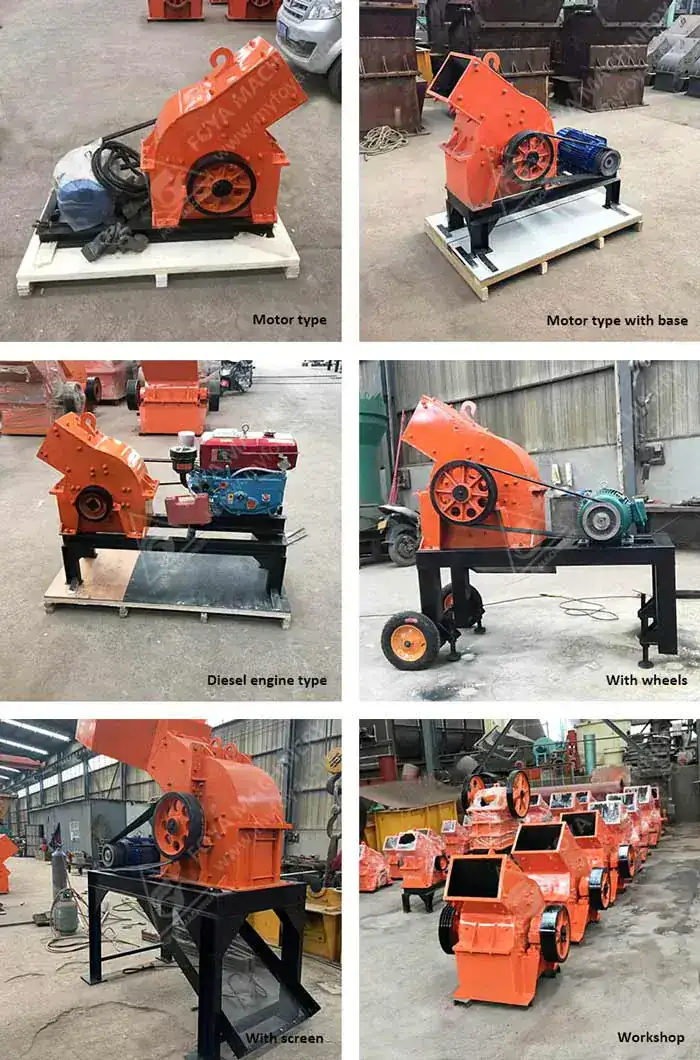
1. How Each Crusher Works — Different Principles, Different Results
The two machines use opposite crushing mechanisms. Understanding this is the key to choosing.
Hammer crusher: A rotor spins at high speed with pivoting hammers that strike the material and throw it against a curved breaker plate and screen. The screen size controls the final particle size. It crushes by impact at high speed, producing a uniform, fine powder.
Jaw crusher: A fixed jaw and a moving jaw form a V-shaped chamber. As the moving jaw push-cycle closes, it compresses and squeezes the material until it fractures, then the crushed fragments fall lower and are crushed again. It produces large, coarse, irregular pieces.
Because a hammer crusher crushes by impact at high rotor speed, it is fast and produces fine, consistent feed. A jaw crusher crushes by slow compression, which is powerful for hard rock but too slow and coarse for making feed.
2. Head-to-Head Comparison Table
| Feature | Hammer Crusher | Jaw Crusher |
|---|---|---|
| Crushing Principle | High-speed impact | Slow compression |
| Typical Output Size | 1–6 mm (adjustable by screen) | 20–150+ mm (coarse) |
| Throughput for Grain | High (500–5000 kg/h) | Lower per ton of feed (crushing, not grinding) |
| Best Feed for | Maize, soybean, wheat, soft minerals | Hard rock, ores, very hard lumps |
| Grain Damage / Fines Control | Good — uniform grind, screen-controlled | Poor — coarse, inconsistent, heat build-up |
| Power Consumption per Ton (feed) | Lower for feed-duty grinding | Higher for useful feed particle size |
| Wear Parts | Replaceable hammers + screens (low cost) | Jaw plates (heavier, more expensive) |
| Purchase Price | Lower | Higher |
| Maintenance | Simple, quick parts change | Heavier, requires more downtime |
| Best For Feed Mills | ✅ Yes — ideal primary grinder | ⚠️ Overkill except for hard mineral feed |
3. Pros and Cons of Each
Hammer Crusher — Pros
- Uniform feed size — the screen guarantees a consistent grind, which improves feed digestibility and pellet quality.
- High throughput on grain and soft ingredients, so you can process a full batch quickly.
- Flexible output — swap the screen to go from coarse meal to fine powder in minutes.
- Low running cost — replaceable hammer blades and screens are cheap and easy to change.
Hammer Crusher — Cons
- Hammers and screens wear faster on very hard or abrasive material.
- It does not handle extremely large or dense rock efficiently.
Jaw Crusher — Pros
- Breaks the hardest materials and very large lumps that would damage a hammer mill.
- Very durable, heavy-duty frame with long service life on hard rock duty.
Jaw Crusher — Cons
- Output is coarse and irregular — generally too big for direct feed, so you need a second grinding pass.
- Slow compression produces heat and more fines on grain, reducing feed quality.
- Higher purchase price, heavier footprint, and more expensive jaw plates to replace.
- Not ideal for the fine, uniform grind a feed line actually needs.
The short version: For a feed mill crushing maize, soybean meal, or other feed grain, the hammer crusher is almost always the right choice. Reserve a jaw crusher for heavy, rock-hard lumps that arrive in raw mineral or very coarse plant material.
4. Output Size Matters More Than You Think
The particle size of crushed feed has a direct effect on animal performance. Feed that is too coarse is under-digested, and feed crushed too fine creates dust and can cause digestive upsets. For most poultry, swine, and cattle feed, the target grind is between 0.5 mm and 3 mm.
A hammer crusher with the right screen hits this range directly. A jaw crusher cannot — it discharges pieces measured in centimetres. If you insist on using one, you must run the output through a secondary grinder anyway, which doubles your equipment and energy cost. That alone usually decides the question in favour of the hammer crusher for feed duty.
5. Power Consumption and Operating Cost
| Metric (per ton of grain) | Hammer Crusher | Jaw Crusher |
|---|---|---|
| Energy to reach feed-grade size | 4–8 kWh | 12–20+ kWh (needs 2 passes) |
| Typical motor | 18–90 kW (matched to capacity) | 30–150+ kW |
| Wear cost / ton | Low (hammers, screens) | Higher (jaw plates) |
| Labour / supervision | Low | Higher (sizing checks) |
6. When to Actually Choose a Jaw Crusher
There are a few genuine cases where a jaw crusher earns its place in, or beside, a feed operation:
- You crush very hard mineral premixes or ores that would wreck hammer blades quickly.
- Your raw material arrives as large, dense lumps that a hammer mill cannot ingest.
- You run a combined plant where coarse rock or oversized material is a regular part of the process.
In those cases, use the jaw crusher as a primary coarse breaker and finish the job with a hammer crusher for feed-grade fineness.
Frequently Asked Questions
Hammer crusher or jaw crusher — which is better for a feed mill?
A hammer crusher is the better choice for most feed mills because it produces a uniform, fine powder ideal for mash and pellet feed, handles grain and soft materials efficiently, and costs less to buy and run. A jaw crusher is best when you need to break very hard, large rock-like material before further processing, but it is slower, higher-wear, and overkill for routine grain crushing.
What feed size does each crusher produce?
A hammer crusher typically produces particles from 1-6 mm, adjustable via the screen mesh, which is exactly the grind range feed mills need for mash and pellet feed. A jaw crusher produces coarser material, usually 20-150 mm or larger, which is generally too coarse for direct feed and would require a secondary grinding step.
Which crusher is cheaper to run and maintain?
A hammer crusher has lower operating cost per ton for processing grain because it crushes at high speed with replaceable, low-cost hammer blades and screens. A jaw crusher has lower blade wear on hard rock but higher initial price, heavier frame, and higher power draw per ton of feed — making it more expensive for typical grain-feed duty.
Can a jaw crusher be used to process grains like maize or soybean meal?
Yes, technically you can run grains through a jaw crusher, but it is inefficient. The output is coarse and inconsistent, unsuitable for mash or pellet feed, and the compression action damages more kernels and yields higher fines and heat. Grains are far better processed in a hammer crusher or dedicated feed-pellet line.
What should I consider when choosing between the two for my feed line?
Consider four things: the feed size you need (hammer wins for feed-grade fineness), the material hardness (jaw wins for hard rock), your processing volume (hammer is better for throughput on grain), and total cost including wear parts. For most feed mills producing mash or pellets, a hammer crusher is the right primary grinder.
Need Help Choosing a Crusher for Your Feed Mill?
Not sure whether a hammer or jaw crusher fits your raw material, capacity, and budget? FOYA Machinery's team can match the right crushing machine to your feed line. We serve over 50 countries with factory-direct pricing and after-sales support.
Browse our hammer crusher, jaw crusher, or feed pellet machine product pages for full specifications, or get in touch for a recommendation.
Contact us for crusher recommendations tailored to your feed mill's specific needs.