A grain thresher quoted at 2,400 US dollars FOB Shanghai does not arrive at your farm for 2,400 dollars. By the time the container is cleared, trucked inland and sitting on your yard, you have paid ocean freight, marine insurance, import duty, value-added tax, terminal handling, a clearing agent, fumigation and road transport. On a mixed 40-foot shipment those extras routinely add 40 to 60 percent to the invoice price — and if the classification is wrong, or one certificate is missing, they add storage and demurrage as well.
This guide is written for the independent farmer and the small trading company that buys machinery directly from a Chinese factory and has to get it through customs alone. It covers the number that decides your duty rate, the document set that customs actually asks to see, where containers really get stuck, a full landed-cost breakdown for one 40HQ box, how the rules differ between Africa, Southeast Asia and South America, and how to choose between EXW, FOB and CIF before you sign anything.
1. HS Codes: The Six Digits That Set Your Duty
Every imported machine is classified under a Harmonized System (HS) code — a numbering system maintained by the World Customs Organization and used by more than 180 countries. The first six digits are the same everywhere. Everything after that is national: your country adds its own digits to create a tariff line, and each tariff line carries its own duty rate, its own licence conditions and its own eligibility for exemptions.
Two consequences follow, and both catch first-time buyers. First, the same physical machine can carry different duty rates depending on which heading it is classified under. Second, the supplier's proposed code is a proposal, not a decision — your customs authority makes the final call, and it makes it after the goods have already sailed.
Farm machinery concentrates in a small group of headings. Below are the ones you will meet most often on machinery imports, with typical treatment in developing markets.
| HS heading | What it covers | Typical duty treatment |
|---|---|---|
| 8432 | Soil preparation and cultivation machinery; seeders, planters, fertiliser distributors, ploughs, harrows | Often zero or reduced — a core mechanisation heading |
| 8433 | Harvesting and threshing machinery; reapers, balers, mowers, grain threshers and shellers | Often zero or reduced |
| 8434 | Milking machines and dairy machinery | Mixed — some markets protect local dairy equipment |
| 8435 / 8437 | Presses and crushers for juice and oil; grain and seed cleaning, sorting and milling machinery | Mixed — frequently reduced, sometimes standard |
| 8436 | Other agricultural machinery; feed mills, hammer mills, chaff cutters, poultry and bee-keeping equipment | Often reduced |
| 8701 | Tractors, including walking tractors and agricultural tractors | Usually higher than implements — check before ordering |
| 8716 | Trailers and semi-trailers for agricultural use | Frequently standard rate |
| 8501 / 8502 | Electric motors and generating sets shipped separately from a machine | Usually standard rate — a trap on spare-motor orders |
Indicative only. Rates change with national tariff schedules, trade agreements and annual budget updates — always have your broker confirm the live rate for your country and your exact tariff line.
Notice the last two rows. A hammer mill imported as agricultural machinery (8436) may clear at a reduced rate, while the spare electric motor sent in the same container under 8501 clears at the standard rate. If a supplier lists everything on the invoice as "agricultural machinery", the customs officer will split it anyway — and you will pay the higher rate on the split plus the time it takes to argue about it.
2. The Document Set Customs Asks For
Machinery clearance is a paperwork exercise before it is an inspection exercise. Missing paper is the reason the overwhelming majority of containers sit at port. Work through this list in order, and treat each step as something that must be finished before the vessel sails, not after it docks.
- Step 1 — Confirm the HS code in writing. Ask the supplier to state the full HS code (international six digits plus your national extension) in the proforma invoice, and send that number to your customs broker for confirmation against the local tariff. Do this before you pay the deposit. Everything downstream — duty, VAT base, licence requirements, exemption eligibility — hangs off this one number.
- Step 2 — Commercial invoice. Itemised by machine: model, quantity, unit price, total, currency, the Incoterm and named port, and the HS code against every line. It must match the sales contract. Customs compares this document to the packing list and the bill of lading line by line, so identical spelling of model numbers matters.
- Step 3 — Packing list. Per package or per unit: net weight, gross weight, dimensions, number of pieces and total volume. This is what lets the terminal and the inspection team know what they are opening, and it is what your inland transport provider quotes from.
- Step 4 — Bill of lading. Issued by the shipping line, this is the document of title. Decide early whether you want original B/Ls couriered to you or a telex release, because a telex release can shorten port time but transfers control of the cargo once the freight is settled.
- Step 5 — Certificate of origin. This is where real money is saved. A valid preferential certificate — Form A for GSP-eligible markets, Form E under the ASEAN–China agreement, Form D for intra-ASEAN trade, or your country's own CO — can drop duty from a standard rate to zero. It must be requested at booking. It cannot be manufactured after arrival.
- Step 6 — Insurance certificate. Required when you buy on CIF or CIP terms, and strongly recommended on FOB. Check the cover level and the clauses: the cheapest policies pay only against total loss.
- Step 7 — Inspection, fumigation and compliance certificates. Many markets require pre-shipment verification (Nigeria's SONCAP and Kenya's PVoC are the well-known examples), and nearly all require wood packaging to carry the ISPM-15 heat-treatment stamp. Ask for plywood crating or heat-treated timber and keep photographs of the stamp and the container seal on file.
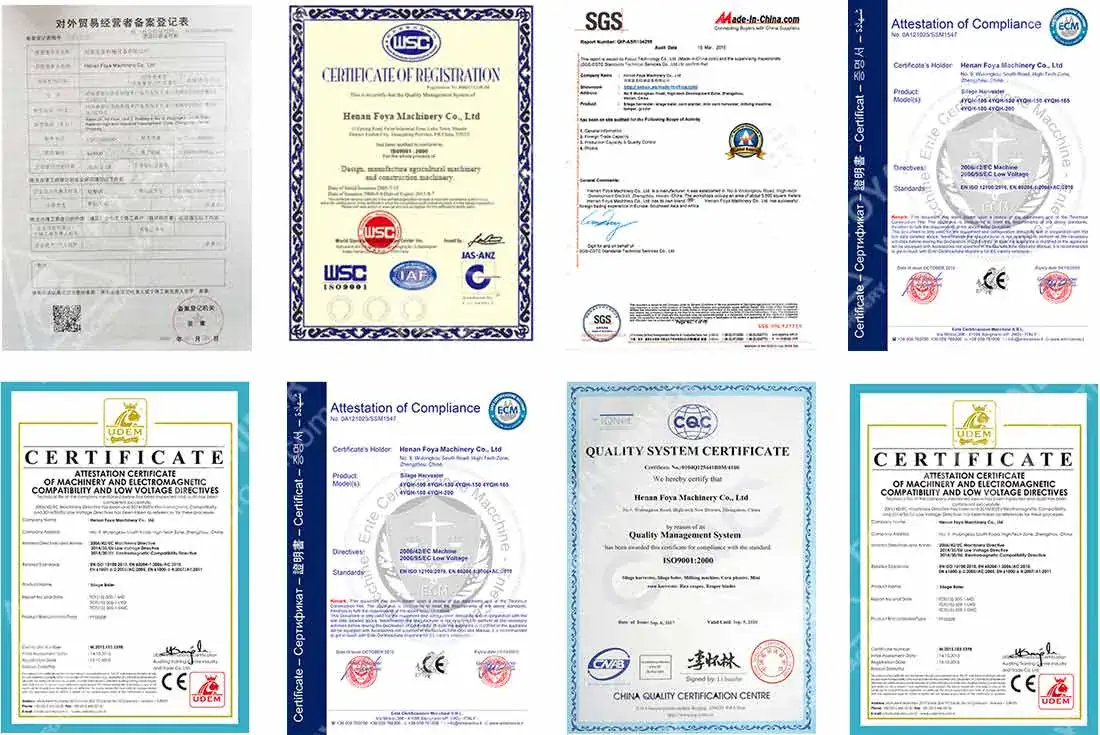
- Step 8 — Test reports and manuals. CE declarations, ISO certificates, engine emission documents, an operator manual and a spare-parts list. Not always demanded at the border, but the first three are frequently asked for at registration or warranty stage, and they cost nothing when ordered with the machine.
3. Where Clearance Actually Stalls
Delays are expensive in a specific way: port storage and demurrage are charged per container per day, and they start on a fixed clock whether or not the hold-up was your fault. The table below maps the delays buyers report most often to their real cause and to the action that prevents them.
| Delay at port | Real root cause | How to prevent it |
|---|---|---|
| Container held 10 days or more before assessment | HS code on the invoice does not match the manifest or the packing list | Fix one code at order time and make all three documents carry it identically |
| Duty demand far higher than the quote | Goods classified under a general machinery heading instead of the agricultural heading | Get written classification confirmation from your broker before paying |
| Preferential rate refused at the counter | Certificate of origin missing, or the wrong form for the trade agreement, or issued after the sailing date | Request the correct CO at booking and check the issue date is on or before the shipment date |
| Pest-control hold on the container | Wooden packaging without an ISPM-15 stamp, or untreated pallets used at the last minute | Specify heat-treated timber or plywood-only packing, and photograph the stamp before loading |
| Storage and demurrage incurred although documents are complete | Clearing agent appointed too late, or originals arrive after the cargo | Appoint the broker two weeks before arrival and courier originals on the loading date |
| Machine released but cannot be used or registered | No type-approval or homologation paperwork for tractors and self-propelled units | Ask the factory for the approval documents with the machine, not after it lands |
4. What a 40HQ Container Really Costs to Land
Numbers persuade better than warnings. Below is a worked example for one 40HQ container shipped from Shanghai to an East African port, carrying a tractor-mounted boom sprayer, two grain threshers and a set of spare parts. Duty is shown at 10 percent, which is typical where agricultural machinery is charged but not exempted, and VAT at 16 percent.
| Cost item | Basis of calculation | Amount (USD) |
|---|---|---|
| Goods | Negotiated FOB Shanghai price | 26,500 |
| Ocean freight | One 40HQ, China to destination port | 3,200 |
| Marine insurance | Approx. 0.4% of CIF value | 120 |
| CIF value | Goods + freight + insurance | 29,820 |
| Import duty | 10% of CIF value | 2,982 |
| Import VAT | 16% of (CIF + duty) | 5,248 |
| Terminal handling and port charges | Per container, destination port | 480 |
| Customs broker / clearing fee | Fixed fee per entry | 350 |
| Fumigation and inspection | Per container | 150 |
| Inland transport | Approx. 300 km to the farm | 620 |
| Total landed cost | Cost of the container on your yard | 39,650 |
Read the two summary numbers together. The invoice says 26,500 dollars. The machine costs 39,650 dollars to have on the farm — a 49.6 percent uplift, and 13,150 dollars of it never appears on the factory's quotation. Now change one variable: if the same shipment is classified in a duty-free agricultural band, the 2,982 dollars of duty disappears and the landed cost falls to roughly 36,000 dollars. Classification is worth more to you than a five percent discount on the machines.
Two more things are worth noting from the table. VAT is charged on the duty-inclusive value, not on the goods alone, so duty quietly inflates your VAT bill as well. And the fixed charges — broker, handling, fumigation, inland haulage — barely move whether you ship one machine or fill the container. That is the real argument for consolidating: the second and third machine in a shared 40HQ travel much more cheaply than the first.
🌾 Farm Buyer Tip
Before you pay a deposit, ask the supplier for the HS code in writing and send it to a local customs broker for a duty quote. That email is free, takes two days, and is the only way to know whether your 26,500-dollar quotation is really a 36,000-dollar machine or a 39,650-dollar one. Buyers who skip it discover the difference at the port, after the goods have sailed.
If you are registered for VAT or GST, remember that the tax portion is usually recoverable against your sales — the duty is not. Budget for the duty as a permanent cost, and budget the tax as cash flow you get back later.
5. Regional Rules: Africa, Southeast Asia and South America
Duty policy for farm machinery is national, but it follows recognisable regional patterns. Use these as a starting map, then confirm the live rate locally.
Africa. Most countries in the region treat mechanisation as a development priority, so implements under 8432 and 8433 frequently clear at zero or a heavily reduced rate while tractors and vehicles attract more. Several markets layer compulsory pre-shipment verification on top of duty — Nigeria's SONCAP and Kenya's PVoC are the best known — which means the inspection happens in China before the machine ships, and a certificate issued at the wrong time is as bad as no certificate at all. Where a common external tariff applies, rates are shared across members, but VAT and levies are still national. Port congestion at the largest gateways is a bigger cost factor than duty on small shipments, so ask your broker about the quiet berths.
Southeast Asia. Intra-regional trade under the ASEAN Trade in Goods Agreement uses Form D to reach preferential rates, while imports from China use Form E under the ASEAN–China agreement — machinery lines are often at zero under both, which makes the correct origin form worth more here than anywhere else. National VAT or GST is charged on top, typically in the 10 to 12 percent band, and a few markets add local standards registration for certain machine types. Because the preferential routes are agreement-based, a single wrong character on the certificate is enough to lose the zero rate.
South America. Mercosur members apply a common external tariff, with agricultural machinery sitting across a wide range depending on the specific line — some implements at zero, tractors and trailers higher. What catches buyers here is the tax stack behind the tariff: federal industrial taxes, social contributions and a state-level circulation tax in Brazil in particular, which together can exceed the duty itself. Registration on the national trader system is a prerequisite for clearing anything, so the importer registration must be complete before the first container is booked, not after.
The common thread across all three regions is that duty is only one line in the bill, and rarely the largest. Origin documentation, pre-shipment inspection and importer registration consistently decide whether a machine clears in a week or a month.
6. EXW, FOB or CIF — Which Term Should You Sign?
The Incoterm on your contract decides where the seller's responsibility ends and yours begins. Three terms cover almost every machinery deal between a factory and a small buyer.
| Term | What the seller pays and organises | What you control | Best for |
|---|---|---|---|
| EXW — Ex Works | Makes the goods available at the factory only | Inland haulage in China, export clearance, freight, insurance, import clearance | Buyers with their own forwarder and agent in China who want the lowest headline price |
| FOB — Free On Board | Inland transport, export clearance and loading onto the vessel at the named Chinese port | Ocean freight, insurance, destination clearance and inland delivery | Most machinery buyers — the standard, auditable choice; you see the freight invoice and own the forwarder relationship |
| CIF — Cost, Insurance, Freight | Everything in FOB, plus ocean freight and marine insurance to your destination port | Import clearance onward — you still pay duty, port charges and inland transport | First-time importers who want one supplier to handle the sea leg; expect a margin inside the freight figure |
Two details are commonly misunderstood. First, CIF does not mean the seller carries the risk to your port — under CIF, risk passes to you when the goods are loaded on the vessel, even though the seller has paid the freight. Second, the insurance included in a CIF price is usually the minimum the contract requires, often 110 percent of the CIF value under the narrowest standard clauses. If a machine falls overboard or is damaged by water, that cover may pay far less than the machine is worth.
Before signing, ask three questions. What HS code will be printed on the invoice and the packing list? Which certificate of origin will be issued, and on what date? And what exactly does the quoted freight cover — port to port only, or including the destination terminal handling charge that will otherwise appear on your bill? A supplier that answers all three precisely is a supplier who has shipped to your market before. For a worked look at the machines themselves, the palm oil press page is a useful example of how a complete specification and packing list are presented — the same discipline that keeps a customs entry clean.
Frequently Asked Questions
Are agricultural machines duty-free when I import them?
In many markets yes, partially. A large number of countries zero-rate or heavily reduce duty on machinery classified in the agricultural headings such as 8432 (soil preparation and planting), 8433 (harvesting and threshing) and 8436 (other agricultural machines), because they want farm mechanisation. Tractors classified under heading 8701 frequently sit at a higher rate than the implements they pull. Duty exemption is never automatic — it depends on how the goods are classified and on your national tariff schedule, so ask your customs broker to confirm the rate for the exact HS code before you pay a deposit.
Who decides the HS code — me or the supplier?
The supplier proposes it and your own customs authority decides it. The internationally agreed six-digit HS code is shared by all World Customs Organization members, but each country adds its own extra digits and its own duty rate. Ask the supplier to print the full HS code on the commercial invoice, the packing list and the bill of lading so all three documents agree, then have your broker verify that code against the local tariff before shipment. A mismatch between documents is the single most common reason a container sits at port.
Which documents must I have before the vessel sails?
Six documents carry almost every machinery import: the commercial invoice, the packing list, the bill of lading, the certificate of origin, the insurance certificate (when you buy on CIF or CIP terms) and any inspection or fumigation certificate your country requires. Add an import licence or pre-shipment verification certificate if your market demands one. Get scanned copies by email on the day the container is loaded and send originals by courier immediately — documents that arrive after the cargo start the storage clock.
Who pays the import duty, the seller or the buyer?
The importer of record pays it, and on EXW, FOB or CIF terms that is you — the buyer. Duty, VAT or GST, port charges and clearing fees are all assessed in the destination country against the importer named on the customs declaration. Only on delivered-duty terms such as DDP does the seller carry that cost, and even then it is normally priced into the quote. Ask for an FOB price plus the destination charges so you can see the two numbers separately.
Can the supplier declare a lower value to reduce my duty?
No — never ask for it. Customs authorities value goods using the transaction value of identical or similar shipments and can re-assess your entry upwards, then add penalties, storage and demurrage while the container is held. A false declaration also voids most marine cargo insurance, because the cover is written against the declared value. The legitimate ways to reduce the bill are correct classification, a valid preferential certificate of origin, and splitting an order so duty-free agricultural items are cleared under their own heading.
How much does it cost to land a 40HQ container of machinery?
On the worked example above — 26,500 US dollars FOB Shanghai, 3,200 dollars of ocean freight and 120 dollars of insurance — the CIF value is 29,820 dollars. At 10 percent duty and 16 percent VAT the landed cost reaches roughly 39,650 dollars once port handling, broker fees, fumigation and inland transport are added, about 50 percent above the invoice price. In a duty-free agricultural band the same shipment lands closer to 36,000 dollars, which is why confirming the HS code before ordering matters more than haggling over the machine price. See a specification example for the kind of detail that keeps an entry clean.
Plan the Duty Before You Sign the Order
The buyers who import machinery smoothly are not the ones who found the cheapest quotation. They are the ones who confirmed the HS code, ordered the certificate of origin at booking, insisted on ISPM-15 compliant packing, and appointed a clearing agent before the container left the factory. Every one of those steps is free when it is done early and expensive when it is done late.
FOYA Machinery ships farm equipment to buyers in more than 50 countries and supplies the commercial invoice, packing list, certificate of origin, test reports and wood-packaging documentation as a standard part of the export file. If you are planning a first import, or want your HS code and document list checked before you commit, send us your port, your machine list and your country — we will confirm what the shipment needs and put the paperwork together while the machines are still on the production line.
Tell us your destination port and machine list — we will confirm the HS codes and export documents before you pay a deposit.