Transplanting rice seedlings by hand is one of the most labor-intensive jobs in small-scale farming. A farmer bent over in a flooded paddy can plant roughly 0.05 acres per hour — and the results depend entirely on experience. Uneven depth means uneven growth. Inconsistent spacing means some plants compete while others waste space.
A manual rice transplanter solves all of this for an investment of $150 to $600. This hand-pushed machine walks through the paddy field, picking seedlings from a tray and inserting them into the mud at consistent spacing and depth — at three to five times the speed of hand transplanting. No fuel, no engine, no battery. Just pure mechanical efficiency.
This guide walks you through every step of choosing the right manual rice transplanter for your farm, from measuring your acreage to checking row configurations, adjusting depth settings, and understanding total cost of ownership.
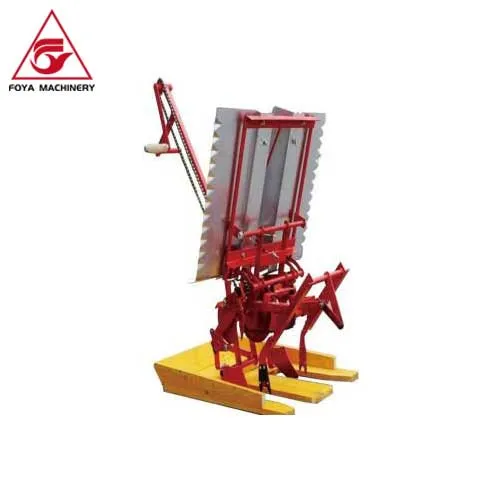
How a Manual Rice Transplanter Works
Understanding the mechanism helps you make a better buying decision. A manual rice transplanter uses a simple walking-beam drive system:
- Walking mechanism: As you push the machine forward, ground wheels rotate a drive shaft connected to the planting mechanism through a chain and sprocket system. The forward motion powers everything.
- Seedling tray: Pre-grown rice seedlings (typically 15-25 days old) are placed on a horizontal tray. The tray moves laterally to feed seedlings one by one into the planting forks.
- Planting forks: Rotating forks pick individual seedlings from the tray and carry them downward into the soil. The fork opens at the bottom, releasing the seedling at the preset depth.
- Floating shoe: A shoe or skid at the bottom follows the field contour, ensuring consistent depth even when the field bottom is uneven.
The entire mechanism is purely mechanical — no hydraulics, no electronics, no fuel. This makes the manual rice transplanter virtually indestructible and repairable by any village mechanic.
Key Specifications Comparison
Manual rice transplanters come in 2-row, 3-row, and 4-row configurations. Here is how they compare:
| Specification | 2-Row | 3-Row | 4-Row |
|---|---|---|---|
| Planting Rows | 2 | 3 | 4 |
| Row Spacing | 10-20 cm (adjustable) | 10-18 cm (adjustable) | 10-15 cm (adjustable) |
| Planting Depth | 2-5 cm | 2-5 cm | 2-5 cm |
| Daily Capacity | 0.4-0.6 acre | 0.6-0.8 acre | 0.8-1.0 acre |
| Machine Weight | 12-14 kg | 15-17 kg | 18-20 kg |
| Operators Needed | 1 person | 1 person | 1-2 persons |
| Seedling Age | 15-25 days | 15-25 days | 15-25 days |
| Best Field Size | Under 1 acre | 1-2 acres | 2-5 acres |
Step-by-Step: How to Choose Your Manual Rice Transplanter
Step 1: Measure Your Paddy Field Area
The single most important factor is your total planted area. If you manage under 1 acre of rice, a 2-row transplanter is sufficient and more maneuverable in small, irregular plots. For 1-3 acres, a 3-row machine offers the best speed-to-weight ratio. Above 3 acres, a 4-row transplanter maximizes daily output. Remember: a heavier machine is harder to push in deep mud, so match row count to both field size and soil conditions.
Step 2: Choose the Right Row Count
More rows mean faster transplanting, but the machine becomes heavier and harder to turn at field edges. In our experience selling transplanters to farmers across Asia and Africa, most smallholders (under 2 acres) prefer 2-row or 3-row machines. Farmers with 3-5 acres of contiguous paddy fields benefit most from 4-row models. The FOYA manual rice transplanter is available in all three configurations.
Step 3: Check Spacing Adjustability
Different rice varieties need different spacing. Indica varieties (long-grain) typically need wider spacing of 15-20 cm between rows, while Japonica varieties (short-grain) can be planted at 10-15 cm. Make sure the machine you choose has tool-free or quick-adjust spacing mechanism. Most quality transplanters allow row spacing adjustment from 10 to 20 cm and depth from 2 to 5 cm.
Step 4: Verify Seedling Tray Compatibility
Manual rice transplanters use specific seedling trays to grow the mat-type seedlings. Standard tray sizes vary by manufacturer. Check that the transplanter you buy comes with compatible trays or uses a widely available standard. FOYA transplanters use 58 cm x 28 cm standard trays that are compatible with most nursery tray suppliers.
Step 5: Assess Build Quality and Weight
Look for a machine with a welded steel frame (not bolted), rust-resistant coating or galvanized parts, and hardened steel planting forks. The chain drive should have a protective cover. A 2-row machine weighing 12-14 kg is easy to carry to the field. Test the pushing resistance if possible — well-designed machines glide through puddled soil with moderate effort.
Price Guide: Manual Rice Transplanter Cost Ranges
| Model Type | Rows | Price Range | Best For |
|---|---|---|---|
| Basic 2-Row | 2 | $150 - $300 | Small plots, hillside terraces |
| Standard 3-Row | 3 | $250 - $450 | Mid-size paddy (1-3 acres) |
| Heavy-Duty 4-Row | 4 | $350 - $600 | Large fields (3-5 acres) |
| Replacement Trays (set of 10) | - | $20 - $40 | Nursery preparation |
| Spare Forks (set of 8) | - | $15 - $25 | Annual replacement |
Manual Transplanting vs Hand Labor: Cost Comparison
The financial case for switching from hand transplanting to a manual machine is compelling, especially over multiple seasons:
| Factor | Hand Transplanting | Manual Transplanter (2-Row) | Savings |
|---|---|---|---|
| Labor per acre | 20-30 person-days | 4-6 person-days | 70-80% less |
| Labor cost per acre | $160 - $300 | $30 - $60 | $130 - $240 saved |
| Planting consistency | Variable (+/- 30%) | Uniform (+/- 5%) | Better yield |
| Transplant shock | Moderate (15-20% loss) | Low (5-8% loss) | Higher survival |
| Machine cost (one-time) | $0 | $150 - $300 | Payback in 1-2 acres |
| Annual maintenance | $0 | $10 - $20 | Minimal |
A 2-row manual rice transplanter pays for itself within the first 1-2 acres of transplanting. After that, every acre is essentially pure savings in labor costs. Over a typical 5-acre rice farm over 3 seasons, the total savings can exceed $2,000.
5 Tips for Using a Manual Rice Transplanter
- Maintain proper water depth: Keep 2-5 cm of water in the paddy during transplanting. Too much water causes seedlings to float; too little makes the soil too hard for the planting forks to penetrate.
- Use seedlings at the right age: 15-25 day old seedlings with 3-4 leaves work best. Older seedlings have roots that tangle and jam the planting mechanism. Younger seedlings are too fragile for the forks.
- Walk at a steady pace: Rushing causes missed plants and shallow insertion. A steady walking pace of about 1-2 km/h produces the best results. Let the machine do the work — do not force it.
- Clean the forks after each use: Mud buildup on the planting forks causes inconsistent release. Rinse with water and apply a light oil to prevent rust. Replace worn forks annually.
- Prepare the nursery mat properly: The seedling mat must have a well-developed root system that holds together when lifted. Under-fertilized or over-crowded trays produce weak mats that fall apart during transplanting.
Frequently Asked Questions
How many rows of manual rice transplanter do I need?
Under 1 acre: 2-row. 1-3 acres: 3-row. 3+ acres: 4-row. More rows = faster but heavier. Match row count to field size and the physical strength of the operator.
How much does a manual rice transplanter cost?
Prices range from $150-$300 for a 2-row, $250-$450 for a 3-row, and $350-$600 for a 4-row. FOYA offers factory-direct pricing with global shipping.
What spacing and depth can I set?
Row spacing is adjustable from 10-20 cm (4-8 inches) and planting depth from 2-5 cm (0.8-2 inches). Adjustments are typically tool-free on quality machines.
How many acres can it cover per day?
2-row: 0.4-0.6 acres. 3-row: 0.6-0.8 acres. 4-row: 0.8-1.0 acres per day. Actual output varies with field conditions and operator skill.
Does it need fuel or electricity?
No. Manual rice transplanters are 100% human-powered. The forward walking motion drives the planting mechanism through a chain and gear system. No fuel, no battery, no engine maintenance.
Is training required to operate one?
Basic operation can be learned in 30 minutes. Most farmers become competent within half a day of practice. The key skills are maintaining steady walking speed and properly preparing seedling mats.
Where to buy a manual rice transplanter?
Buy from local dealers or directly from FOYA Machinery. FOYA offers 2-row, 3-row, and 4-row models with adjustable spacing. Contact us via WhatsApp or email for pricing and delivery.
Ready to Upgrade Your Rice Transplanting?
Whether you need a compact 2-row machine for small terraced fields or a 4-row transplanter for larger paddies — FOYA Machinery has the right manual rice transplanter for your farm. Our machines feature adjustable spacing and depth, durable welded steel frames, and standard tray compatibility. We ship worldwide and provide full technical support.
Contact FOYA Machinery for pricing, specifications, and shipping on manual rice transplanters and farm equipment.