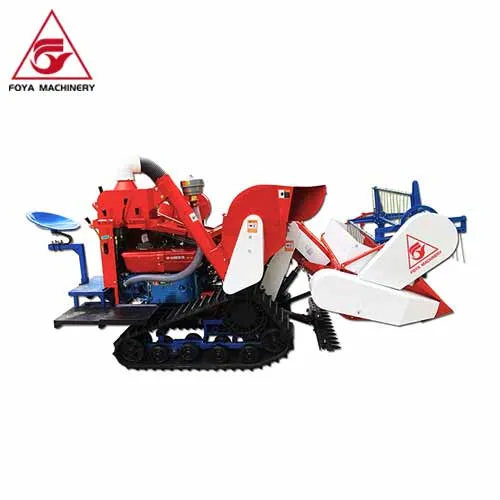
If you grow rice and wheat on a small to medium farm, you are caught between two bad options: manual harvesting (back-breaking and slow) or a full-size combine (too expensive at $30,000+). A mini rice wheat combine harvester is the solution. These compact, self-propelled machines integrate reaping, threshing, and cleaning into one pass, yet cost 80% less than a full-size combine and fit easily into small fields, narrow paths, and even terraced paddies.
This guide covers everything you need to know before buying a mini rice wheat combine: model comparison, specs, price ranges, key features to look for, and how to choose the right size for your farm.
Mini Rice Wheat Combine Harvester Comparison Table
Here is a side-by-side comparison of the most common mini combine configurations available in 2026:
| Specification | Compact Model (1.0m) | Mid-Size Model (1.2m) | Large Model (1.5m) |
|---|---|---|---|
| Cutting Width | 1.0 m | 1.2 m | 1.5 m |
| Engine Power | 20 - 25 hp | 25 - 30 hp | 30 - 35 hp |
| Harvesting Capacity | 2 - 3 acres/day | 3 - 4 acres/day | 4 - 5 acres/day |
| Grain Tank Capacity | 200 L | 300 L | 400 L |
| Machine Weight | 800 - 1000 kg | 1000 - 1200 kg | 1200 - 1500 kg |
| Loss Rate | < 2% | < 2% | < 2% |
| Price Range (USD) | $4,000 - $6,000 | $6,000 - $8,500 | $8,500 - $12,000 |
| Best For | Small paddies, terraced fields | Medium farms, flat terrain | Larger small farms, custom work |
Mini Combine vs Full-Size Combine: Price and Performance Comparison
Understanding how mini combines stack up against full-size machines helps you make an informed buying decision:
| Type | Price Range (USD) | Cutting Width | Acres/Day | Fuel Consumption |
|---|---|---|---|---|
| Mini Combine (1.0m) | $4,000 - $6,000 | 1.0 m | 2 - 3 | Low |
| Mini Combine (1.5m) | $8,500 - $12,000 | 1.5 m | 4 - 5 | Low-Medium |
| Mid-Size Combine | $20,000 - $40,000 | 2.5 - 3.5 m | 8 - 15 | Medium |
| Full-Size Combine | $40,000 - $100,000+ | 4 - 7 m | 20 - 40 | High |
A mini combine costs 5 to 20 times less than a full-size machine while still providing mechanized harvesting at 2-5 acres per day. For farms with 5-30 acres of rice or wheat, this is the most economical choice. The fuel savings alone can cover the purchase cost within 2-3 seasons.
How to Choose the Right Mini Rice Wheat Combine
Three factors determine the right model for your farm: field size, terrain type, and grain handling needs.
1. Match Cutting Width to Field Size
Your field size dictates the cutting width you need. For fields under 5 acres, a 1.0 m model is sufficient and more maneuverable. For 5-15 acre fields, a 1.2 m model offers the best balance of speed and cost. For 15-30 acres, step up to a 1.5 m model to keep harvest time manageable. A good rule of thumb: you want to complete your harvest within 5-7 days at most, so divide your acreage by the daily capacity.
2. Consider Your Terrain
Mini combines handle a range of terrains, but there are important differences. For flat, well-drained fields, any model works well. For wet paddy fields, look for a model with wide rubber tracks or optional 4WD to prevent getting stuck. For terraced or sloped fields, a lighter machine (under 1000 kg) with a lower center of gravity is safer and more stable. The FOYA Mini Rice Wheat Combine Harvester offers excellent stability even on uneven terrain thanks to its balanced chassis design.
3. Think About Grain Handling
Grain tank capacity matters more than you might think. A 200 L tank fills up quickly in a heavy crop, requiring frequent unloading stops. If your fields are far from your storage area, consider a model with a 300-400 L tank or a grain bagging attachment that lets you keep harvesting while the grain is collected separately. Every hour spent unloading is an hour not spent harvesting.
Key Features to Look For
Not all mini combines are built the same. Here are the features that matter most for reliable, efficient operation:
Adjustable Cutting Height
Rice and wheat grow to different heights depending on variety, season, and soil fertility. A mini combine with adjustable cutting height (typically 50-300 mm) lets you adapt to crop conditions without leaving unharvested stalks or picking up too much soil.
Threshing and Cleaning System
The quality of threshing determines grain quality and loss rate. Look for a machine with adjustable threshing drum speed and concave clearance. This allows you to fine-tune the machine for different crops: rice needs gentler threshing than wheat to prevent grain breakage. The cleaning fan should have adjustable airflow to separate chaff effectively without blowing grain out.
Low Loss Rate
A loss rate under 2% is the gold standard for mini combines. This is achieved through properly designed threshing drums, concave grids, and cleaning fans. Higher loss rates mean more grain left in the field — and lower profit from your harvest. The FOYA mini combine maintains a loss rate below 2% across both rice and wheat crops.
Ease of Maintenance
Harvest season is time-sensitive. Choose a machine with accessible service points, easy belt tension adjustment, and common replacement parts that are readily available. FOYA maintains a comprehensive spare parts inventory and offers technical support to minimize downtime during harvest.
Why Choose a Mini Combine Over Manual Harvesting?
The numbers tell the story. One person with a mini combine can harvest 2-5 acres per day, compared to 0.1-0.2 acres per day by manual harvesting with a sickle. Labor costs in most regions range from $10-$30 per person per day, meaning manual harvesting a 10-acre field costs $500-$3,000 in labor alone — and takes 50-100 person-days. A mini combine pays for itself after harvesting just 5-15 acres, depending on your local labor rates. Plus, mechanized harvesting reduces post-harvest losses significantly because the threshing and cleaning happen immediately after cutting, rather than days later.
FOYA Mini Rice Wheat Combine Harvester Specifications
FOYA Machinery offers a purpose-built Mini Rice Wheat Combine Harvester designed for small to medium farms. Here are the key specifications:
- Cutting Width: 1.0 m – 1.5 m (choose based on your field size)
- Engine Power: 20 – 35 hp
- Harvesting Capacity: 2 – 5 acres/day
- Grain Tank Capacity: 200 – 400 L
- Machine Weight: 800 – 1500 kg
- Kernel Loss Rate: Less than 2%
- Operation: Self-propelled, one-person operation
- Terrain: Suitable for dry and wet paddy fields
The FOYA mini combine features an integrated reaping-threshing-cleaning system that lets you harvest rice and wheat in a single pass. Its compact design navigates narrow field paths with ease, and the self-propelled operation eliminates the need for a separate tractor. Optional 4WD is available for wet field conditions.
Frequently Asked Questions
How much does a mini rice wheat combine cost?
What is the difference between a mini combine and a full-size combine?
Can a mini rice wheat combine harvest both rice and wheat?
How many acres can a mini combine harvest per day?
Does a mini combine need a tractor to operate?
Where to buy a mini rice wheat combine?
Final Recommendation
For small farms with 3-10 acres of rice or wheat and predominantly flat fields, a 1.0 m compact model ($4,000-$6,000) is the most economical choice. It is maneuverable, low on fuel, and pays for itself within 2-3 seasons. For medium farms with 10-30 acres, invest in a 1.2 m or 1.5 m model ($6,000-$12,000) to keep harvest time under a week. If your fields are wet or terraced, prioritize 4WD capability and a lighter machine. Whichever size you choose, a mini combine transforms harvesting from a labor bottleneck into a one-person operation.
Browse the FOYA Mini Rice Wheat Combine Harvester product page for detailed specifications, or contact our team for a personalized recommendation.
💬 Get a Quote or Ask a Question
Our team can help you find the right mini combine for your farm.
Chat on WhatsApp Send Email