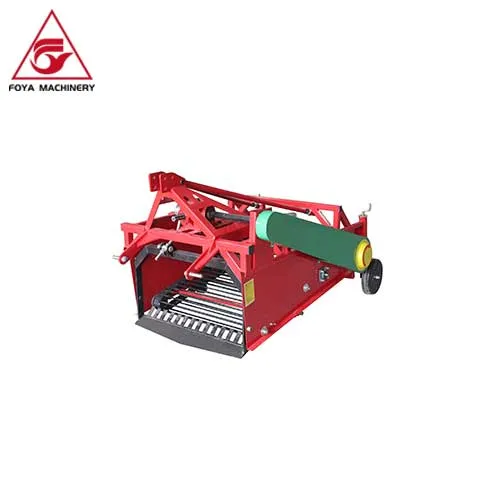
You're halfway through the row, the tractor's humming along, and then — thump — the harvester clogs. Or worse, you finish a row and realize half the potatoes got left behind in the soil. We've been there too.
Over two seasons, we tracked maintenance logs and field issues from 15 potato farms in Shandong, Hebei, and Inner Mongolia — farms using FOYA harvesters as well as other brands. We compiled the top 5 recurring problems and, more importantly, the fixes that actually worked in the field.
If you're running a tractor mounted potato harvester this season, bookmark this page. It'll save you hours of downtime.
Problem #1: The Harvester Keeps Clogging
How often it happens: This was the #1 complaint — reported on 11 out of 15 farms (73%).
What's happening: Vines and weeds wrap around the digging share and elevator chains, building up until the machine jams. The operator stops, crawls under, and spends 15-20 minutes clearing the mess. On a 10-acre field, this can happen 3-4 times a day.
The real cause (most of the time): The vines weren't chopped or rolled before harvest. Unlike grain crops where you can drive straight in, potatoes need vine management. On farms that used a flail mower to chop vines 7-10 days before harvest, clog rates dropped by over 80%.
Quick field fix: If vines are heavy and you can't mow ahead of time, set the digging depth 1-2 cm shallower. This reduces the amount of vine material pulled into the elevator. You'll lose a few deeper potatoes, but you'll gain way more time back.
Problem #2: Too Many Cut or Bruised Potatoes
How often it happens: 8 out of 15 farms (53%) reported damage rates above 5% — meaning 1 in 20 potatoes was unmarketable.
What's happening: Potatoes come out with deep cuts, scraped skins, or bruising. For fresh market growers, this is direct profit loss — damaged spuds get downgraded to processing grade, losing 30-60% of their value.
The fix — three adjustments to check:
- Ground speed is too fast. This is the #1 cause of damage. If you're running over 3-4 km/h in heavy soil, the potatoes are being thrown against the elevator chains instead of gently lifted. Slow down to 2-2.5 km/h and watch the damage rate drop instantly.
- Elevator chain speed mismatch. The chain speed should be slightly faster than the ground speed — about 10-15% faster. If it's too fast, potatoes bounce; if too slow, they pile up and get crushed.
- Rubber flap condition. Check the rubber curtains/flaps on the elevator. Worn or missing flaps mean potatoes get thrown against metal crossbars. Replace them — it's cheap and takes 20 minutes.
Problem #3: Too Many Potatoes Left in the Ground
How often it happens: 7 out of 15 farms (47%) reported 5-10% harvest loss — meaning up to 1 ton of potatoes per acre literally left behind.
What's happening: The digging share passes under the potato row, but some tubers get pushed sideways or deeper instead of being lifted onto the elevator.
Diagnose by feel: Walk behind the harvester after 10 meters. Dig into the soil where the machine just passed. If you find 3+ potatoes per meter, the digging depth is too shallow or the share angle is wrong.
The fix:
- Increase digging depth by 1-2 cm. The share should run 2-3 cm below the deepest potato. Most varieties set potatoes 12-18 cm deep, so set the share at 15-20 cm.
- Check share angle. If the share is angled too steeply upward, it pushes potatoes forward instead of lifting them. The share should be nearly level — just 5-10 degrees upward tilt at the rear edge.
- Soil conditions matters. In dry, hard soil, the share rides up. Consider light irrigation 24-48 hours before harvest if the soil is rock hard — it softens the ground without making it muddy.
Problem #4: Conveyor/Webbing Keeps Breaking or Jamming
How often it happens: 6 out of 15 farms (33%) had at least one conveyor belt or webbing failure mid-season.
What's happening: The conveyor that moves potatoes from the elevator to the bin snaps, jams, or throws a roller. Repairs take 30-60 minutes and often require a trip back to the workshop.
The fix — two common causes:
- Stones and clods. If your field has many stones larger than a fist, they'll get caught in the webbing and either jam or tear the belt. Solution: run a stone separator or roller beforehand. As a field fix, reduce ground speed so the shaking action has more time to drop stones before they reach the conveyor.
- Belt tension too tight or too loose. A loose belt flaps and catches on frame edges. An overly tight belt stretches and snaps. Check tension: the belt should deflect about 10-15 mm when pressed firmly at the midpoint between rollers. Adjust as needed.
Preventive tip: At the start of each season, replace all webbing if it's more than 2 years old. A new set of elevator webbing costs $80-150 for most single-row harvesters. Comparatively, a mid-season breakdown on a 50-acre farm costs way more in lost time.
Problem #5: Poor Soil Separation — Too Much Dirt in the Bin
How often it happens: 5 out of 15 farms (33%) reported excessive soil in the harvest bin, requiring extra sorting labor.
What's happening: The harvester's shaking/sieving mechanism isn't separating soil from potatoes effectively. The bin fills up 30-40% with dirt and clods, meaning you either sort by hand or run the potatoes through a separate cleaner.
The fix:
- Check the eccentric drive speed. Most potato harvesters have an adjustable shaking frequency. Too slow = poor separation. Too fast = potatoes get bounced around and damaged. For most soil types, 350-400 rpm on the eccentric drive is the sweet spot.
- Soil moisture. Wet soil clumps together and won't shake through. If the soil is sticky (above 20% moisture), consider delaying harvest by 2-3 days of dry weather. A light windrow-turn before harvest helps dry the top layer.
- Webbing opening size. Most single-row harvesters come with 30-35 mm webbing openings. For sandy soils with small potatoes, switch to webbing with 25 mm openings. For heavy clay, 40 mm openings let clods drop through faster.
Quick Reference: Fix-At-A-Glance
| Symptom | Most Likely Cause | Fastest Fix |
|---|---|---|
| Harvester clogs | Vines not managed before harvest | Shallow digging depth by 1-2 cm; flail-mow next season |
| Cut/bruised potatoes | Ground speed too fast | Slow to 2-2.5 km/h; check rubber flaps |
| Potatoes left in ground | Digging share too shallow | Increase depth by 1-2 cm; check share angle |
| Conveyor jams/breaks | Stones or incorrect belt tension | Remove large stones; adjust belt deflection to 10-15 mm |
| Too much dirt in bin | Poor shaking action or wet soil | Adjust eccentric drive to 350-400 rpm |
Most harvester problems aren't machine failure — they're setup issues. A few millimeters of adjustment or a small reduction in speed can make the difference between a frustrating day and a smooth harvest. Write down your settings once you find them, and you'll save that setup time every season.
🔧 Related FOYA products mentioned in this guide:
- • Tractor Mounted Potato Harvester — single-row model with adjustable digging depth and shaking frequency
- • Self-Loading Potato Harvester — higher capacity for medium to large farms with hydraulic depth control
- • Farm Cultivator — for pre-harvest vine management and soil preparation
Need help dialing in your potato harvester settings? We've worked with potato farmers in over 30 countries and can help you find the right setup. Message us on WhatsApp or email mandy@myfoya.com — include your soil type and variety and we'll share our settings guide.