For potato growers, the harvest window is narrow and labor is expensive. A self-loading potato harvester changes the economics entirely — it digs, separates, elevates, and loads potatoes into an onboard hopper in a single pass, eliminating the need for 4-6 manual pickers per machine. But choosing the right model requires balancing hopper capacity, tractor power, row configuration, and budget.
This guide compares the key specifications, presents a data-driven comparison table, and covers the critical factors to consider before investing in a self-loading potato harvester for your farm.
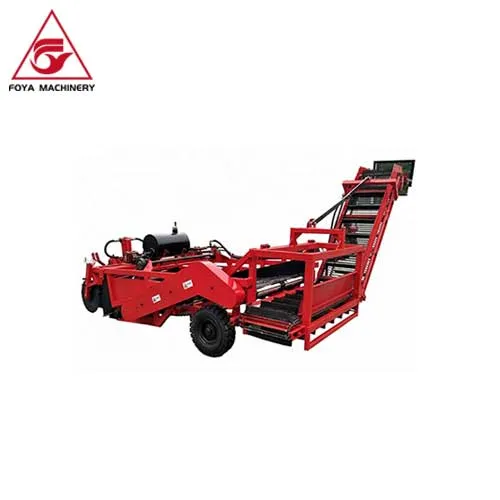
1. Model Comparison — Key Specs at a Glance
Self-loading potato harvesters vary primarily by row count and hopper capacity. The table below maps the common configurations to farm size and tractor requirements:
| Model Type | Harvesting Rows | Hopper Capacity | Digging Depth | Recommended Tractor Power | Yield (mu/hour) | Best For |
|---|---|---|---|---|---|---|
| Compact 1-Row | 1 | 500 kg | 150-200 mm | 50-60 HP | 1.5-2.5 | Small farms, uneven terrain |
| Standard 1-Row | 1 | 700-800 kg | 150-250 mm | 55-70 HP | 2.0-3.0 | Medium farms (10-30 mu) |
| Large 2-Row | 2 | 1000 kg | 150-250 mm | 70-80 HP | 3.0-6.0 | Large farms (30+ mu), flat fields |
All FOYA self-loading potato harvester models feature a vibrating soil separation system, adjustable digging depth, and a gentle handling conveyor that keeps damage rates under 3%. The self-loading design means the operator never leaves the cab to pick potatoes — the machine does all the work.
2. Hopper Capacity — The Efficiency Decider
Hopper size is the single most important factor affecting field efficiency. Every time the hopper fills, you must pause forward motion to tilt-unload into a trailing truck or field-edge trailer. A larger hopper means fewer stops per acre, but also adds weight and requires more tractor power.
- 500 kg hopper: Unload every 10-15 minutes on a 2-row machine. Best for small fields where unloading happens frequently at row ends anyway.
- 700-800 kg hopper: Unload every 18-25 minutes. The sweet spot for most medium-sized operations — good balance of capacity and tractor compatibility.
- 1000 kg hopper: Unload every 25-35 minutes. Maximizes field time for large, flat fields. Requires 70+ HP tractor and careful weight distribution.
Consider your average row length. Short rows (under 200 m) benefit less from oversized hoppers because you naturally stop more often. Long rows (400 m+) strongly favor larger hoppers to avoid mid-field unloading stops.
3. Matching Tractor Power — Avoid These Pitfalls
Undersizing the tractor is the most expensive mistake you can make. A self-loading potato harvester demands sustained power at the PTO and enough hydraulic flow to operate the lifting mechanism and hopper tilt. The machine weight (800-1200 kg) also requires the tractor to have adequate chassis strength and ballast.
| Harvester Type | Machine Weight | Min Tractor HP | Recommended HP | PTO Requirement | Hydraulic Remotes |
|---|---|---|---|---|---|
| 1-Row (500 kg hopper) | 800-900 kg | 50 HP | 55-60 HP | 540 RPM | 1 double-acting |
| 1-Row (700-800 kg hopper) | 900-1000 kg | 55 HP | 60-70 HP | 540 RPM | 1 double-acting |
| 2-Row (1000 kg hopper) | 1000-1200 kg | 70 HP | 75-80 HP | 540 RPM | 2 double-acting |
Warning: Operating below the minimum HP range causes inconsistent digging depth as the tractor bogs down in heavier soil. The vibrating soil separator also loses frequency, leading to more soil being carried into the hopper rather than being shaken out. Always test your tractor's sustained PTO output — not just the manufacturer's peak rating.
4. Row Count — 1-Row vs 2-Row Decision Matrix
The choice between a 1-row and 2-row self-loading harvester affects harvest speed, tractor compatibility, and upfront cost. Here is the comparison:
- 1-Row (Compact & Standard): Lower cost ($6,000-$15,000), works with smaller tractors (50-70 HP), better maneuverability on uneven ground and headlands. Ideal for farms under 30 mu or fields with irregular layouts. Harvest rate: 1.5-3 mu/hour.
- 2-Row (Large): Higher upfront cost ($15,000-$22,000), requires a 70+ HP tractor, but doubles throughput (3-6 mu/hour). Best for large, rectangular fields with uniform row spacing. Pays for itself faster on acreage above 30 mu.
If you are expanding acreage year over year, consider buying a 2-row model even if your current tractor is only 60 HP — you can run it at reduced speed initially and upgrade the tractor later. The harvester itself will last 8-12 years with proper maintenance.
5. Crop Versatility — Beyond Potatoes
FOYA's self-loading potato harvester is designed for multi-crop use. The adjustable digging depth (150-250 mm) and variable vibration frequency make it suitable for sweet potatoes, onions, garlic, carrots, and peanuts. When switching crops, adjust the digging depth so the share runs just below the deepest tuber or bulb — too deep wastes power and brings up excess soil, too shallow causes cutting damage. The gentle handling conveyor system, with its padded flight bars and optimized speed ratio, keeps damage rates below 3% across all these crops.
6. Buying Checklist — What to Verify Before Purchase
- Digging share design: Replaceable bolt-on shares are preferred over welded — much faster field repairs if you hit a rock.
- Soil separation system: Vibrating rod-link conveyors are standard on most self-loading models. Check the rod spacing — wider gaps pass more soil but can drop small potatoes. 25-30 mm rod pitch is the best compromise for table-stock potatoes.
- Hopper unloading height: Ensure the hopper tilts high enough to clear the side walls of your truck or trailer. Most self-loading models achieve 2.0-2.5 m dump height at full tilt.
- Wheel track adjustability: For farms with different row spacings (typically 70-90 cm for potatoes), adjustable wheel track width saves hours of frustration during setup.
- Parts availability: Verify that digging shares, conveyor belts, bearings, and hydraulic hoses are available as stock spares. FOYA offers global parts shipping within 3-7 days for all self-loading harvester models.
Frequently Asked Questions
What tractor horsepower do I need for a self-loading potato harvester?
For a 1-row self-loading potato harvester, a tractor with 50-65 HP is sufficient. For a 2-row model, you need 65-80 HP. The tractor must have a 540 RPM PTO and sufficient hydraulic capacity to operate the lifting mechanism. Operating below the recommended power range will cause inconsistent digging depth and frequent clogging.
What size hopper do I need for my potato farm?
Hopper capacity directly determines how long you can harvest before unloading. A 500 kg hopper is ideal for small farms (under 10 mu) and short row lengths. A 700-800 kg hopper suits medium operations (10-30 mu). For larger farms (30+ mu), a 1000 kg hopper minimizes unloading stops and maximizes field efficiency.
How much does a self-loading potato harvester cost?
Entry-level 1-row self-loading potato harvesters range from $6,000 to $10,000. Mid-range 1-row models with larger hoppers (700-800 kg) cost $10,000 to $15,000. 2-row models with 1000 kg hoppers range from $15,000 to $22,000. FOYA Machinery offers factory-direct pricing — contact us for current quotes on our models.
Should I choose a 1-row or 2-row self-loading potato harvester?
A 1-row harvester is best for small to medium farms (under 30 mu), uneven terrain, or fields with irregular row spacing. It is more maneuverable, requires less tractor power, and costs less. A 2-row model doubles the harvesting speed (3-6 mu/hour vs 1.5-3 mu/hour) and is ideal for larger, flat fields with uniform row spacing. Consider your field layout and tractor power before deciding.
What crops can a self-loading potato harvester handle besides potatoes?
Self-loading potato harvesters with adjustable digging depth and gentle handling mechanisms can also harvest sweet potatoes, onions, garlic, carrots, and other root crops. The key is adjusting the digging depth (150-250 mm range), vibration frequency, and conveyor speed to match the specific crop and soil conditions. FOYA's harvesters come with adjustable settings for multi-crop versatility.
How does the self-loading mechanism work on a potato harvester?
The self-loading mechanism replaces manual collection: harvested potatoes travel up an elevator conveyor and are deposited directly into an onboard hopper. When the hopper is full, the operator hydraulically tilts the hopper to unload into a trailer or truck — without stopping the tractor. This eliminates the need for 4-6 manual pickers per machine, saving significant labor costs over the harvest season.
Ready to Upgrade Your Potato Harvest?
The right self-loading potato harvester can cut your harvest labor by 60-80% while reducing crop damage and speeding up the entire operation. FOYA Machinery offers a full range of self-loading harvesters — from compact 1-row models with 500 kg hoppers to heavy-duty 2-row units with 1000 kg capacity — all backed by factory-direct pricing, global shipping, and responsive after-sales support.
Not sure which model fits your farm? Our team can help you match the right harvester to your tractor power, acreage, and crop type.
Contact FOYA Machinery for pricing, specifications, and shipping on self-loading potato harvesters and related farm equipment.