Every livestock farmer faces the same autumn question: how do you keep pasture green in a dry winter? Two machines claim the answer — the silage baler and the bale wrapper. Both preserve forage, but they work in completely different ways, cost different amounts, and lose different percentages of feed value.
This guide compares silage balers and bale wrappers across the numbers that actually matter: dry matter loss, plastic cost per bale, time per tonne, storage life, and total cost per cow. By the end, you will know exactly which system — or which combination — fits your herd size, your crop and your budget.
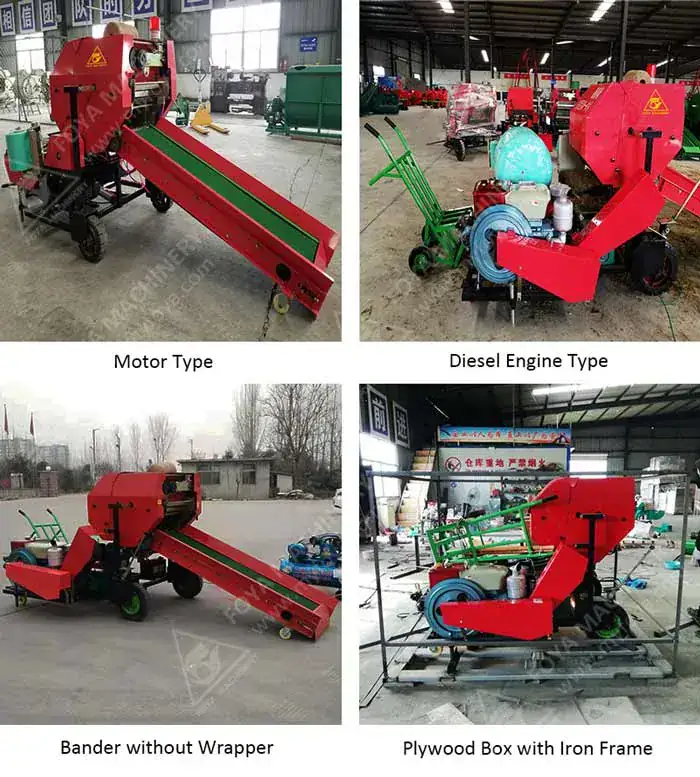
What Each Machine Does — The 60-Second Version
A silage baler (sometimes called a square bale baler or round silage baler) compacts freshly cut, wilted forage directly into dense bales as it travels over the field. The forage is baled at the moment of pickup, then either wrapped immediately or stacked and wrapped later. Because the baler is the primary harvesting tool, it must be matched to your row-crop or grass uptake: pickup width, bale size and throughput all matter.
A bale wrapper — the star of modern silage preservation — takes already-formed bales and seals them in 4 to 6 layers of stretch film. The film blocks oxygen, which is what lets lactic acid bacteria ferment the forage into stable, long-storage silage. A wrapper never cuts or collects forage itself; it is purely a preservation appliance. Many dairy and beef farms buy the two machines together, running a baler then a wrapper in one pass.
Head-to-Head: Silage Baler vs Bale Wrapper
The table below summarises the practical differences. "Baler-first" and "wrapper-first" thinking often confuses first-time buyers, so keep the split clear: the baler creates the bale, the wrapper preserves it.
| Comparison Point | Silage Baler | Bale Wrapper |
|---|---|---|
| Primary role | Bale freshly cut forage in the field | Seal finished bales with stretch film |
| Typical bale size | Round 1.2 m diameter or square 300×400 mm | Handles any bale the baler produces |
| Throughput | 40–120 bales/hour depending on machine | 20–60 wrapped bales/hour |
| Power | PTO 30–90 hp or engine 18–40 hp | Tractor PTO or small 3–5 kW motor |
| Dry matter loss target | Baler alone exposes bale to air | Keeps DM loss below 5% when sealed well |
| Purchase price | $4,000–$25,000 | $2,500–$9,000 |
| Best for | Producing the bale itself | Protecting the bale long-term |
Note: the "Baler" column answers "what does the baler deliver?" and the "Require" column answers "what does the wrapper need to work on?" — they are partners, not rivals.
Dry Matter Loss: The Feed-Value Fighting Stat
Dry matter (DM) is the actual nutrients in forage after water is removed. Every day a cut crop sits exposed to air, it loses DM through respiration and mould. A well-sealed wrapped bale holds DM loss to roughly 3–5%. Loose, unprotected bales can lose 15–30% of DM, plus dangerous mould that can make cattle refuse feed or even fall ill.
Concrete example: a 400 kg bale at 35% DM holds about 140 kg of dry feed. A 5% loss wastes 7 kg per bale; a 20% loss wastes 28 kg per bale. On 1,000 bales a year, the difference is roughly 21,000 kg of usable dry feed — the annual forage for several extra cows.
If you already own a silage baler, pairing it with a wrapper is almost never a mistake. The baler does the heavy lifting and the wrapper locks the value in place.
Pros and Cons: Silage Baler
- Pro — Produces a dense, transportable bale directly in the field; one machine covers cutting, pickup and compaction.
- Pro — For square bale models, bales stack flat, cutting storage footprint by up to 50%.
- Con — Baling alone never seals forage; without wrapping or a pit, air re-enters and spoilage begins.
- Con — Higher purchase price and heavier PTO or engine requirements; needs a capable tractor.
- Con — Bale density depends on operator technique and forage moisture — both are easy to get wrong.
Pros and Cons: Bale Wrapper
- Pro — Lifts DM preservation to 95%+, extending feed life for months in perfect condition.
- Pro — Lower entry price; a wrapper is an affordable add-on to any existing baler, even a rented one.
- Pro — Wrapping is fast, film is cheap, and bales stay movable and stackable.
- Con — A wrapper by itself produces nothing; you must already have bales.
- Con — Plastic film is a recurring consumable cost and requires responsible disposal.
- Con — Tears or a late pick-up let oxygen in, resetting the whole preservation job.
Which System Should You Choose?
Base your choice on herd size, storage style and whether you already own a tractor with PTO:
- Fewer than ~15 cows, or under ~100 bales a year: consider a single silage baler feeding into a shared or rented wrapper, or skip wrapping and feed fresh-cut forage within days. A small wrapper you can borrow or hire keeps capital low.
- Midsize herds, 100–500 bales: the classic pairing — a baler plus a trailer or in-line wrapper. This is the sweet spot for cost per preserved tonne.
- Large herds, 500+ bales, or long-distance feed storage: invest in both. Bale and wrap in the same pass, store under cover, and you protect feed for 12 months or more.
- Rice-straw or grass-only producers who want winter feed without a second machine will find silage harvesters a practical primary option, with bale wrapping as a finishing step.
If space is tight or you already feed from a pit, examine the silage bagging machine as an alternative to individual bale wrapping — bagging seals large volumes in one continuous operation.
Finishing Cost per Bale
| Item | Baler + Wrapper (per bale) | Baler only, unwrapped (per bale) |
|---|---|---|
| Film (wrapper) | $1.50–$2.50 | — |
| Labour (operator time) | $1.00–$2.00 | $0.60–$1.20 |
| Fuel & wear | $1.20–$2.50 | $0.80–$1.80 |
| DM loss cost (est.) | $0.80–$1.50 | $3.00–$7.00 |
| Typical total | $4.50–$8.50 | $4.40–$10.00 |
The wrapped bale costs more up front, but when dry matter savings and reduced cow-health risk are counted, the wrapped route is almost always cheaper per tonne of feed actually eaten.
Frequently Asked Questions
Can you use a silage baler without a bale wrapper?
Yes, but only if you feed the bales promptly. Unwrapped baled forage begins to spoil within days because oxygen reaches the surface. For storage longer than a few weeks, wrapping is essential. Baling alone is a harvest tool; preservation still requires sealing.
How many layers of stretch film does a wrapper apply?
Most wrappers apply 4–6 layers, and 6 is the standard recommendation for round bales that will be stored outside. More layers cost more film but cut DM loss further and protect against rain and bird damage.
Which machine is more expensive to run?
Per bale, a baler usually costs more to run because it burns fuel, wears pickup components and needs a large PTO tractor. The wrapper's main running cost is stretch film — roughly $1.50–$2.50 per bale — which is a small price for the feed value it preserves.
Is a bale wrapper worth it for a small farm?
If you produce more than about 30–50 bales a season and want to store feed for winter, yes. A cheap, reliable wrapper or a shared/hired machine protects feed value across the season. For very small operations, feeding fresh-cut forage may be more economical.
How long does wrapped silage stay usable?
Correctly wrapped, intact bales keep for 12 months or longer — many farms feed bales wrapped the previous season. The key is a clean seal, 6 layers of film, and storing bales off the ground away from sharp objects that can tear the plastic.
Can a wrapper handle square and round bales?
Some models handle both by adjusting the rotating table, but many are designed for only one shape. Round bales are the most common for wrapping. If you produce square bales, confirm the wrapper’s table accepts them before buying.
Make the Right Call for Your Forage
Silage balers and bale wrappers are not enemies — they are the two halves of a single, feed-saving system. Choose your baler for throughput and bale shape, then choose a wrapper that protects that bale until the last mouthful is eaten. Invest in good film, seal correctly, and store carefully, and your winter feed will thank you.
FOYA Machinery supplies silage balers, bagging machines and a full range of forage handling equipment with factory-direct pricing to over 50 countries. Our team will help you size the setup to your herd and storage space.
Talk to us for a silage baler and wrapper combination sized to your farm herd and feed budget.