Every farm that runs machinery has one drawer, shelf or corner where the "just in case" parts live — a spare belt from three seasons ago, a handful of bolts, a bearing still in its wrapper, or a bearing already rusted solid because nobody checked. That shelf decides whether a field day goes ahead or a machine sits still while the crop ripens past its best.
A breakdown is not the problem. When it happens is the problem. A failed bearing in the off-season is a workshop afternoon. The same bearing in the middle of a ten-day harvest window is a lost crop, a hired-in replacement, or a penalty clause on a contract. This guide is about closing that gap: knowing what fails, keeping the right parts on the shelf, and spotting the failure before it stops the machine.
What a Day of Downtime Actually Costs
Most farmers underestimate downtime because they measure it in repair cost, not in deferred work. The repair bill for a belt is small; the value of the crop that was not harvested on schedule is not. The table below puts a rough figure on a single lost day for the machines most exposed to a short harvest window, assuming a mid-sized operation working a 10-hour day.
| Machine | Typical Daily Work | Value at Risk per Day | Usual Failure Trigger |
|---|---|---|---|
| Combine / corn harvester | 8–15 ha harvested | $1,200–$4,000 in deferred grain | Drum belt, concave, sieve, rotor bearing |
| Rice reaper / windrower | 6–12 ha cut | $600–$2,200 in cut crop left standing | Cutterbar sections, drive belt, reel bearing |
| Round / square baler | 400–900 bales | $800–$3,000 in bales not made | Knotter parts, needle, chain, twine guide |
| Hammer mill / grinder | 4–20 t milled | $300–$1,500 in feed shortfall | Hammers, screen, drive belt, rotor bearing |
| Grain / maize sheller | 10–30 t shelled | $400–$1,800 in backlog storage risk | Threshing teeth, concave, belt, sieve |
| Seed drill / planter | 15–40 ha drilled | $700–$2,500 in delayed establishment | Seed disc, coulter, metering chain, hopper seal |
Read the last column carefully. In almost every case the trigger is a cheap consumable — a belt, a set of teeth, a length of chain. The expensive part is the machine standing idle and, in the worst case, the crop window closing. A $40 belt that prevents a $2,000 day pays for itself fifty times over, which is why the economics of a spare-parts shelf are almost never about the parts themselves.
The 12 Wear Items Worth Keeping on the Shelf
You cannot stock everything, and you should not try. These twelve categories cover the overwhelming majority of field failures across harvest, processing and planting machinery. Suggested quantities are per machine unless noted; adjust upward if you run several units of the same model.
| # | Part | Fits | Suggested Stock | Replace At | Failure Sign |
|---|---|---|---|---|---|
| 1 | V-belts / drive belts | All powered machines | 2 sets | Every 1–2 seasons | Glazing, cracking, glazed slip marks, burning smell |
| 2 | Bearings (rotor & shaft) | Mills, harvesters, balers | 2–4 pcs | 1,500–3,000 h | Rumble, play when hand-turned, heat at the housing |
| 3 | Threshing teeth / hammers | Shellers, hammer mills | 1 full set | 300–800 t processed | Rounded tips, higher power draw, coarser output |
| 4 | Concave / wear plates | Shellers, harvesters | 1 set | As matched to teeth | Grain damage rate rising, more unthreshed cobs |
| 5 | Cutterbar sections & guards | Reapers, mowers | 1 set + 10 spares | 50–150 ha cut | Bearded, ragged stubble; smeared stems |
| 6 | Knotter parts & needles | Balers | 1 set | By bale count / season | Missed knots, broken twine, double-tied bales |
| 7 | Chain & sprockets | Balers, planters, conveyors | 1 length + 1 sprocket | Per season | Stretch, hooking, chain slap, jumping on load |
| 8 | Hydraulic seals & hoses | All hydraulic machines | 1 seal kit + 1 hose | Every 2–3 seasons | Sweating joints, weeping fittings, slow ram creep |
| 9 | Filters (oil, air, fuel, hydraulic) | All engine-driven units | 2 sets | Per 100–250 h | Rising exhaust smoke, power drop, dirty oil |
| 10 | Seed discs / metering parts | Planters, drills | 1 set | Per season | Uneven spacing, skipped rows, over-thick stands |
| 11 | Screens / sieves | Mills, shellers, harvesters | 1 set | 1–2 seasons | Torn mesh, contamination in output, screen bowing |
| 12 | Tyres, tubes & wheel bolts | Trailed & self-propelled units | 1 tyre + 2 tubes | By tread / damage | Sidewall cracking, slow air loss, loose wheel nuts |
Spare-Part Kits by Machine Type
If you prefer to buy in bundles rather than piece by piece, the fastest route is a machine-specific kit. The composition differs sharply by machine, because the failure mode differs:
- Harvesters (combine, mini corn harvester): drum and rotor belts, rotor bearings, concave and sieve elements, knife sections, hydraulic seal kit, plus a spare air and fuel filter set. Harvesters fail under continuous load, so belts and bearings dominate.
- Balers (round, square, silage): knotter assembly parts, needles, twine guides, chain and sprockets, pickup teeth, plus hydraulic seals for the tailgate. Baling failures are overwhelmingly knotter and chain failures.
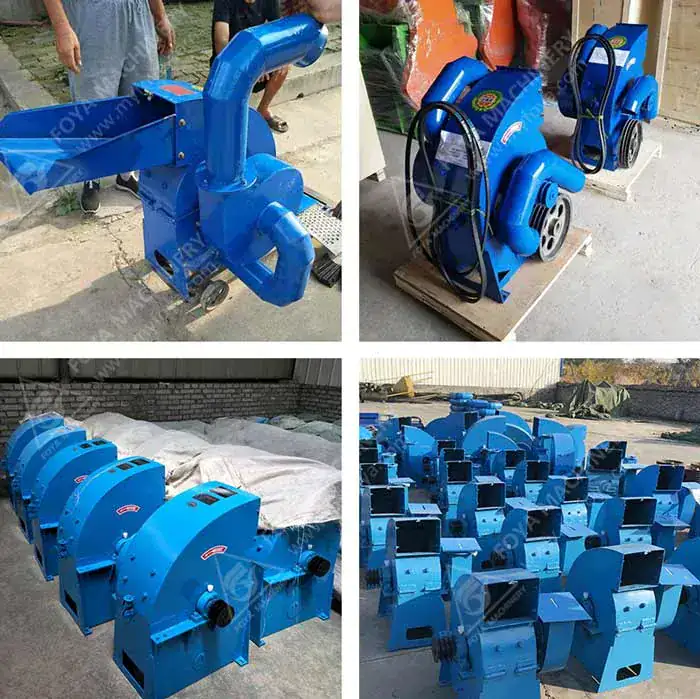
- Hammer mills & grinders: a full set of hammers, at least two screens in the sizes you use, drive belts, rotor bearings and a set of hammer bolts. Hammers and screens are consumed in direct proportion to tonnes milled — see our feed hammer mill range for the standard screen and hammer sets.
- Shellers & threshers: threshing teeth, concave, sieve, drive belt and bearing set. If your model also handles beans or sorghum, keep the alternate concave so a wet season does not stall you — the grain sheller is built around this kind of swap-out.
- Reapers & mowers: cutterbar sections and guards, reel bearings, drive belts and a spare sickle. Reapers are a classic harvest-window bottleneck because a single dull section can smear an entire pass — see the rice reaper cutterbar assembly for the reference layout.
- Planters & drills: seed discs, metering chains, coulters, hopper and seed-tube seals. Planter failures are less dramatic but cost establishment, which is harder to recover than a slightly late harvest.
Genuine vs Aftermarket — Where the Saving Is Real and Where It Is a Trap
Aftermarket parts are not automatically bad, and genuine parts are not automatically necessary for every position on the machine. The distinction that matters is whether the part carries load, controls timing, or affects safety. Where it does, the saving on a copy is usually a false economy. Where it does not — filters, fasteners, belts of matching profile — an independent supplier is a legitimate choice.
| Aspect | Genuine / OEM-Spec | Aftermarket Copy |
|---|---|---|
| Typical price | 100% (reference) | 40–70% of genuine |
| Material & heat treatment | Specified and controlled | Variable; often softer or thinner |
| Expected service life | Full rated interval | 50–80% of genuine in wear positions |
| Fit / tolerance risk | Low | Medium to high on precision items |
| Secondary damage risk | Low | High if dimensionally off (bearing seats, timing) |
| Warranty cover | Covered with the machine | Rarely covered; may void related claims |
| Safe to use as a copy | Always | Filters, belts (same profile), chain, bolts, grease points |
| Never substitute | — | Concave, teeth, knotter parts, hydraulic seals, gearbox internals, PTO components |
The practical rule: buy genuine for anything that rubs against grain, controls a knot, holds hydraulic pressure or transmits drive through a gearbox. Buy aftermarket, from a supplier you trust, for filters, fasteners, same-profile belts, chain and consumables. And when the price of a copy is under half of genuine for a load-bearing part, ask yourself what was taken out to get there.
Reading Wear Before It Becomes a Breakdown
The cheapest spare part is the one you replace on a Saturday afternoon because you noticed a symptom, not the one you replace in a field because the machine stopped. Each class of part tells you in advance:
- Tyres: sidewall cracking and a slow pressure loss point to ageing rubber and a leaking bead, not just a puncture. Uneven scrubbing means axle or alignment trouble — replacing the tyre alone will not fix it. Check wheel nut torque after every wheel change; loose nuts shear studs and wreck rims.
- Bearings: the first sign is heat, the second is noise. A bearing housing that is warm to the back of the hand after a short run is on its way out. Play when you hand-turn the shaft, or a rumble that changes with speed, means replace now, not at the end of the season. A failed bearing can score the shaft and turn a $15 job into a $400 one.
- Belts: a glazed, shiny inner face and a black dust film mean the belt is slipping and the pulley is polishing it. Cracks at the base of the ribs and frayed edges mean the cord is exposed. Both are terminal. Belts rarely fail without warning — they fail after weeks of slipping that nobody tightened.
- Blades, teeth and hammers: wear is progressive and measurable. A rounded hammer tip, a section that no longer shears cleanly, or a knife edge that has gone shiny all the way to the back all mean increased power draw and reduced quality. Rotate or reverse reversible parts on schedule so all edges wear evenly instead of replacing a set early.
Storing Parts So They Are Usable Next Season
A spare part that has corroded on the shelf is not a spare part. Storage conditions decide whether your stock is an asset or a decoration:
- Keep everything off the floor. Damp concrete wicks moisture upward. Use wooden pallets or steel racking so air can move under the stock.
- Control humidity and rust. Bare metal — teeth, shafts, coulters, chain — should be wiped with a light oil or wrapped in oiled paper. For a humid climate, a sealed cabinet or a crate with a desiccant pack is worth the small cost.
- Leave bearings sealed until fitting. Never remove a bearing from its packaging to "check it". Once the protective film is broken, dust and moisture start the clock. Keep bearing boxes upright and never stack heavy parts on top of them.
- Keep rubber in the dark. Belts, hoses, seals and tyres age from sunlight, ozone and heat. Store them in a cool, dark place — not next to an electric motor or a welder, which generate ozone. Hang belts on a peg by their widest point rather than folding them, and never store them coiled under tension.
- Label and rotate. Mark each part with the date it arrived. Use oldest first. A shelf of unlabelled parts is how you end up with three identical belts, two of them perished.
Five Questions to Ask Before You Order
Most parts problems are actually ordering problems. Ask these five questions every time, and you will avoid the two classic failures — a part that does not fit, and a part that arrives a week after you needed it.
- Is this part matched to my exact model and serial? Machine models change within a production run. Give the model, year and serial number, and ask the supplier to confirm the match in writing rather than "it should fit".
- What is the minimum order quantity? Some suppliers only sell hammers or knotter parts by the full set. Knowing the MOQ stops you from ordering four of a part that ships in tens, or paying set price for one piece.
- What is the delivery lead time to my address? Not the dispatch time — the door-to-door time, including customs. A part that leaves the factory in two days but clears customs in three weeks is not a spare part during harvest.
- Is freight included, and how is it packed? Belts and bearings need different packaging. Confirm whether the quoted price includes shipping, duties and packing adequate for the journey — a bent coulter or a crushed screen is a total loss.
- What is the warranty, and what does it cover? Ask about the warranty period, whether it covers the part only or consequential damage, and whether a failed part must be returned. Get the answer before you pay, not after the part fails.
Emergency Substitutions — What Works and What Never Does
When a machine stops mid-window you will be tempted. Know in advance which substitutions are survivable and which will destroy the machine:
- Acceptable as a short bridging measure: a same-profile belt from another brand; a matching-size bearing from a reputable industrial supplier; a length of correct-pitch chain shortened to fit; a hydraulic hose made up to the same pressure rating and end fittings by a specialist.
- Never substitute: a belt of different cross-section or length; a bearing with a different bore, width or seal type; any hydraulic hose of a lower pressure rating; a copy knotter part in the middle of a baling run; a welded or repaired load-bearing component.
- The general taboo: do not "make it work" by removing a guard, increasing tension beyond spec, or running a mismatched part "just for this field". Short-term improvisation on a load-bearing part is how a cheap repair becomes a cracked housing, a bent shaft or an injury.
Build a Digital Stock List
The final piece is visibility. A paper note taped inside a shed door is better than nothing, but a simple spreadsheet on a phone is far better — everyone can see it, and you can check it from the field. Whatever tool you use, make sure it captures at least these fields:
- Part name and part number — the supplier's number, exactly as printed
- Machine model and serial it fits — so a part is never "for the baler" in general
- Quantity on hand and minimum reorder level — the trigger for restocking
- Storage location — rack, shelf, bin, so nobody has to hunt
- Date received and supplier — for rotation and for tracing a bad batch
- Warranty expiry — so a failed part is still replaced under cover
- Unit price and lead time — so you can judge what is worth holding and what is worth ordering on demand
Update it the same day you take a part off the shelf, and do a full audit at the end of each season. The audit is where the system earns its keep: it tells you which parts you actually consumed, which lets you order the next season's stock early at a better price instead of paying a premium for an emergency shipment in the middle of harvest.
Frequently Asked Questions
How much spare parts stock should a farm keep?
A practical rule is one full set of fast-wearing items per machine on hand, plus one shared spare for every three machines of the same model. For critical single points of failure such as a combine drum belt or a knotter finger, keep two. Slow-moving parts like a gearbox or a main shaft can be ordered on demand if your supplier ships within a week.
Are aftermarket parts safe to use on harvest machinery?
Some are, some are not. Filters, V-belts, chain, grease nipples and carriage bolts can usually be bought from a reputable independent supplier without risk. Genuine or OEM-spec parts matter for anything that controls timing, load or safety: drum and concave components, cutterbar sections, knotter parts, hydraulic seals, PTO components and gearbox internals. A mismatched copy here causes secondary damage costing far more than the part saved.
What are the first spare parts a new machine owner should buy?
Start with belts, filters, a set of knives or hammers, bearings for the highest-speed shaft, hydraulic seals and a length of chain. These six cover the majority of breakdowns in the first two seasons and cost a fraction of a single lost harvest day.
How should spare parts be stored on the farm?
Keep parts dry, off the floor and out of direct sun. Store belts, hoses and rubber seals in a cool, dark place away from electric motors and ozone sources. Coat bare metal parts with a light oil film, keep bearings in their sealed packaging until fitting, and never store parts in a leaking or damp shed — a rusty bearing is a failed bearing.
How often should spare parts stock be checked?
Do a quick visual count at the start of each month and a full audit at the end of every harvest season. The end-of-season audit is the important one: you know exactly which parts you actually used, so you can top up before the price rises and before the next season's rush. Record every part removed from stock so the count stays honest.
Can I use a substitute belt or bearing in an emergency?
For a belt, a same-profile belt of a different brand is usually acceptable for a short period, but never substitute a different cross-section or length — it will slip, overheat and take the pulley with it. For bearings, matching bore, outside diameter, width and seal type is the minimum; if any dimension differs, stop. Never improvise hydraulic hoses, and never weld a repaired part back into a load-bearing position.
Keep the Window Open
A spare-parts shelf is not about hoarding. It is a small, deliberate investment that keeps your sheller, your hammer mill and your reaper working on the days that actually decide your season. Get the twelve categories above onto a shelf, label them, store them properly, and audit once a year — and the next time a belt lets go, you will be back in the field before lunch instead of waiting on a shipment.
Deciding which parts to keep is easiest when you start from the machine. Browse our agricultural machinery range or send us your model and serial number and we will tell you exactly which wear items to stock.
Send us your machine model and we will build a spare-parts checklist for your farm.