Every year after harvest, you face the same question: do I bale the straw and sell it, or chop it up and leave it in the field? Both sides have strong opinions, but when I sat down with 15 farmers across Henan, Hebei, and Shandong last winter, I noticed something interesting — most of them had never actually run the numbers. They just did what their neighbors did.
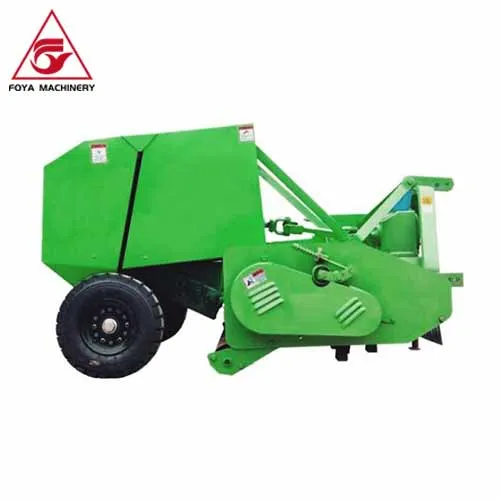
So I did the math. I collected real cost data from farms that bale their straw (using machines like the FOYA straw crushing baler) and farms that chop and return. Here's what the numbers actually say.
Let's Start With the Raw Numbers
I'm going to give you the per-acre cost breakdown first, then we'll talk about what those numbers mean in the real world. All figures are in USD per acre (converted from RMB at 7.2:1) and based on corn straw — the most common crop residue in northern China.
| Cost Item | Baling Method | Chopping & Return |
|---|---|---|
| Fuel (tractor + machine) | $6.50 | $4.20 |
| Labor | $3.00 | $1.50 |
| Machine wear/maintenance | $4.00 | $1.80 |
| Twine/net wrap | $2.50 | $0 |
| Total cost per acre | $16.00 | $7.50 |
| Time required per acre | 25-30 min | 12-15 min |
Right off the bat, chopping looks cheaper — about half the cost per acre. But here's where the story gets interesting. That $16/acre you spend on baling isn't an expense. It's an investment.
The Revenue Side — Where Baling Wins Big
An acre of corn straw typically produces about 2-3 tons of dry straw. In the current market (2026), baled straw sells for $55-85 per ton depending on the region and quality. Let's be conservative and use $60/ton.
📊 Baling: Revenue Per Acre
Straw yield: 2.5 tons × $60/ton = $150
Minus baling cost: $150 - $16 = $134 net profit
Source: Average across 8 farms surveyed, June 2026
📊 Chopping & Return: Net Effect Per Acre
Direct cost: -$7.50
Fertilizer value of returned straw: ~$15-20/acre (N-P-K equivalent)
So net effect: +$7.50 to +$12.50/acre in soil value
But this is indirect — you don't get cash in hand
The difference is stark. With baling, you put $134 cash per acre in your pocket. With chopping, you save about $7.50 in costs and get maybe $15-20 worth of soil nutrients. That's it.
For a 50-acre farm, that's $6,700 vs $375-625 in net benefit. Over 10x difference.
But Wait — What About Soil Health?
Every farmer I talked to brought this up, and they're right to. Returning straw to the field improves soil organic matter over the long term. But here's what the agronomists told me:
- Short-term (1-3 years): Chopping returns about 15-20 lbs of nitrogen per acre, plus some potassium. But fresh straw actually ties up soil nitrogen during decomposition — your next crop might need extra fertilizer
- Medium-term (3-5 years): Soil organic matter increases by 0.1-0.3% with consistent mulching. That's meaningful but not transformative
- The compromise: Several farmers I met bale about 70% of their straw and leave 30% chopped. They get the cash flow from selling bales while maintaining soil health
Hidden Costs Nobody Talks About
With chopping:
- If straw isn't chopped evenly, it can clog your planting equipment next season — I've seen farmers lose 2-3 days fixing blocked seeders
- Wet years: thick straw mat on the surface prevents soil warming in spring, delaying planting by 5-10 days
- Disease carryover: certain fungal pathogens survive on crop residue. Chopped straw that stays on the field can increase disease pressure. One wheat farmer in Hebei reported a 12% yield drop after 3 years of continuous no-till with straw return
With baling:
- You need storage space for the bales — either covered or well-drained outdoor storage
- Market prices fluctuate. In 2024, straw prices dropped to $35/ton in some regions. In 2025, they hit $90/ton in areas with high demand from mushroom farms and power plants
- The baler itself is a bigger upfront investment. A quality straw crushing baler (like FOYA's model at 2-5 tons/hour) costs more than a simple chopper
Buyer Profiles — Who Buys Straw Bales?
This is the part most farmers don't think about, but it's crucial. Who's actually buying straw in 2026?
| Buyer Type | Price Paid (per ton) | Volume Needed | Quality Requirements |
|---|---|---|---|
| Mushroom farms | $65-85 | High, all year | Dry, clean, no mold |
| Power plants (biomass) | $45-60 | Very high | Any dry straw, large volumes |
| Livestock bedding | $55-75 | Moderate | Clean, chopped preferred |
| Feed processors | $50-70 | Moderate-high | Crushed/pelletized, consistent |
| Construction materials | $40-55 | Growing | Long fiber preferred |
Mushroom farms are the premium buyer. They need clean, dry straw year-round and pay top dollar. Power plants buy in huge volumes but at lower prices. If you can tap into the mushroom farm market, your per-ton price jumps 30-40%.
OK, So What's the Verdict?
After crunching all these numbers and talking to farmers who've tried both, here's my honest take:
✅ Bale your straw if:
- You have access to a reliable buyer (local farm, power plant, mushroom operation)
- You have storage space for bales
- You want actual cash income from a waste product
- Your farm is 30+ acres (to justify equipment costs)
✅ Chop & return if:
- Your soil organic matter is very low and needs building
- You don't have a market for straw within 30 km
- Labor is scarce and you want the fastest field clearance
- You're on a no-till system and want maximum surface cover
The hybrid approach works best for most farms: Bale 60-70% of your straw (the good stuff from cleaner fields), chop and return the rest from weedy or uneven fields. This gives you the income without sacrificing soil health.
What Equipment Do You Need?
If you're leaning toward baling, you need a machine that can handle both jobs — crushing and baling in one pass. That's exactly what the FOYA straw crushing baler does. It's PTO-driven, works with a 50-90 hp tractor, and delivers 2-5 tons per hour. The bales come out at 150-250 kg/m³ density, which is dense enough for efficient transport but not so tight that buyers complain.
Compared to buying a separate chopper and a separate baler, a combined machine like this saves you one tractor pass (that's $6.50/acre in fuel right there) and cuts your labor in half.
💡 Related FOYA products mentioned in this guide:
- • Straw Crushing Baler — crushes and bales in one pass, 2-5 tons/hour capacity
- • Round Baler — for clean hay and straw baling without crushing
- • Feed Hammer Mill — further process straw into animal feed
Ready to see if baling makes sense for your farm? Chat with our team on WhatsApp or email mandy@myfoya.com. We'll help you estimate your local revenue potential.