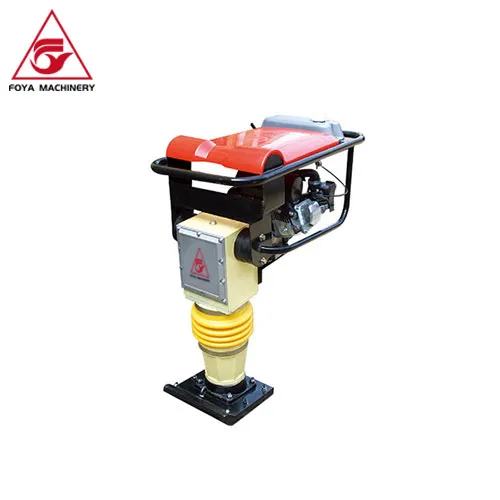
A tamping rammer — commonly called a jumping jack — is the go-to compaction machine for trenches, backfill, and tight spaces where a plate compactor simply cannot fit. It delivers powerful vertical blows that compact cohesive clay and deep soil lifts to the density foundations and pipe bedding require. From pipeline trenches to retaining-wall backfill and paving edge restoration, choosing the right tamping rammer depends on impact force, engine size, and how much ground you need to cover. This guide walks through rammer vs plate compactor, gasoline and electric types, sizing by impact force, and 2026 pricing.
How a Tamping Rammer Works
A tamping rammer consists of a small petrol (or electric) engine that drives a vertical piston mechanism. The engine spins an internal crank that compresses a return spring; at the top of the stroke the spring releases, slamming a heavy ramming foot downward with a sharp impact force measured in kilonewtons (kN). This high-frequency vertical impact pushes soil particles together, removing air voids and increasing density.
Key parts to understand when comparing models:
- Engine — 4-stroke petrol motor, typically 3.5-9 hp, that powers the mechanism
- Ramming foot — the narrow steel plate that delivers the blows (a smaller foot concentrates force)
- Bellows boot — protects the moving shaft from dust and debris
- Return spring — stores and releases energy for each impact
- Handle with vibration isolation — reduces operator hand-arm vibration
- Impact force (kN) — the key spec; higher equals deeper, denser compaction
Tamping Rammer vs Plate Compactor
Buyers frequently ask whether they need a rammer or a plate compactor. The short answer: it depends on the soil and the space. The table below summarizes the practical differences.
| Feature | Tamping Rammer | Plate Compactor |
|---|---|---|
| Best for | Cohesive clay, trench, backfill | Granular soil, gravel, asphalt |
| Compaction method | High-impact vertical blows | Vibrating flat base |
| Footprint | Narrow, fits tight spaces | Wide plate, open areas |
| Compaction depth | Deeper (300-700 mm lift) | Shallower (100-300 mm lift) |
| Coverage speed | Slower per area | Faster, large area |
| Ideal use | Trenches, walls, utilities | Parking lots, slabs, base |
Many contractors own both. If your work is mostly excavating and bedding pipe in clay-rich soil, lead with a tamping rammer. If you pave or spread gravel over open ground, a plate compactor will be far more efficient. Some spread the budget across one of each.
Gasoline vs Electric Tamping Rammers
| Considering | Petrol (Gasoline) | Electric |
|---|---|---|
| Power source | Petrol engine, self-contained | Needs mains power or generator |
| Portability | High — works anywhere | Limited — cable range |
| Running cost | Fuel + servicing | Lower, cleaner |
| Noise / emissions | Noisier, exhaust fumes | Quieter, no local emissions |
| Best for | Remote sites, field work | Indoor, enclosed, light duty |
For the vast majority of trench and construction work, a 4-stroke petrol tamping rammer is the practical choice — no cable, no generator, ready to work in seconds. Electric units shine only where power is available and exhaust must be avoided.
Choosing by Impact Force
Impact force is the single most important specification. It determines how deep you can compact and whether the machine can handle heavy clay. Match the impact force to your job:
| Class | Impact Force | Engine | Typical Use |
|---|---|---|---|
| Light | 10-15 kN | 3.5-5 hp | Sand, small repairs, light pipe beds |
| Medium | 15-25 kN | 5-6.5 hp | General trench, backfill, footings |
| Heavy | 30-55 kN | 7-9 hp | Stiff clay, deep lifts, foundations |
As a rule of thumb, add about 20-30% margin over your typical requirement. A machine that is too small will make you run passes repeatedly without reaching target density; one that is too large is heavier to handle and costs more than needed.
Working Speed and Daily Output
Output depends on blows per minute and how you move the rammer. Most models deliver 600-750 blows per minute. A skilled operator can cover roughly 100-180 m² per hour in lifts of 300-700 mm, though heavy clay and deep compaction will cut that number. Budget your time accordingly: rammers compact deeply but cover ground more slowly than plates.
Also consider the operating weight. A heavier rammer (65-95 kg) delivers more force but is tiring to carry between excavations. If the machine will be lifted out of trenches repeatedly, a mid-weight model with a good carry handle pays off.
Maintenance Essentials
- Air filter and spark plug — clean or replace regularly to keep the engine starting reliably
- Engine oil — change every 50-100 operating hours
- Bellows boot — inspect for cracks; a torn boot lets dust into the mechanism
- Return spring — check for wear; it is the heart of the impact force
- Ramming foot — replace when worn or cracked to avoid losing compaction quality
Ask the supplier about spare-part availability and engine brand before you buy. A rammer with a common engine (Honda, Robin, Lifan) is far easier and cheaper to keep running in the field.
2026 Tamping Rammer Price Guide
| Class | Impact Force | Engine | Price Range (USD) |
|---|---|---|---|
| Light petrol rammer | 10-15 kN | 4-5 hp | $600 - $1,200 |
| Medium petrol rammer | 15-25 kN | 5-7 hp | $1,200 - $2,500 |
| Heavy-duty rammer | 30-55 kN | 7-9 hp | $2,500 - $5,000 |
| Reversible plate compactor | 2,400-5,000 kgf vib. force | 5-7 hp | $1,500 - $4,000 |
FOYA tamping rammers are built for dependable trench and backfill compaction with robust 4-stroke engines and easy-access service points. Factory-direct pricing includes worldwide shipping arrangements and technical support on machine selection, spare parts and operation.
Frequently Asked Questions
What is the difference between a tamping rammer and a plate compactor?
How much impact force do I need in a tamping rammer?
How much does a tamping rammer cost in 2026?
What engine size should a tamping rammer have?
How fast does a tamping rammer work and how often do I service it?
Ready to Buy a Tamping Rammer?
FOYA Machinery offers tamping rammers from light models for pipe-bedding to heavy-duty units for clay and deep-lift compaction, all built for reliable field work. Every machine includes a robust 4-stroke engine, vibration-isolated handle, and easy service access. Contact our team for help sizing the right rammer for your soil type, trench depth and daily compaction target.
Also explore: Tamping Rammer product page | Power Trowel | Road Cutter | Steel Bar Benders