Ask any workshop that repairs farm machinery what kills implements fastest, and the answer is rarely poor steel or bad bearings. It is almost always a mismatch between tractor horsepower and the implement hanging off the back. The bearing failure, the cracked gearbox, the burnt clutch — those are symptoms. The disease is a pairing that was never sized properly.
This chart-based guide is built for buyers and operators who want numbers, not generalities. We cover the two directions of mismatch, the PTO speed standards you cannot ignore, the working formula behind power demand, a full implement HP requirement table, soil correction factors, three-point lift limits, slip losses on wet ground, and a six-step sizing routine you can run before you order anything.
Two Ways to Get It Wrong — Both Are Expensive
Underpowered is the mistake most farmers make, usually because a smaller tractor is cheaper and already sits in the shed. The consequences build slowly:
- Poor work quality. The operator lifts the implement to keep the engine from stalling, so tilling depth drops from 25 cm to 15 cm and the seedbed is left rough and cloddy. Yield suffers for the whole season.
- Chronic engine overload. Running continuously at full torque load raises exhaust gas temperature, burns more fuel per hectare, darkens the oil, and shortens injector and turbo life. On naturally aspirated engines this shows up as black smoke under load.
- Transmission punishment. The clutch is the first casualty. Slip in second and third gear, a burning smell after a long pass, and a pedal that engages higher every month are all classic signs of an overloaded driveline.
- Excessive wheel slip. An engine that cannot turn the tyres simply spins them. Slip above 20% wastes power as heat and tyre wear and destroys soil structure in the wheel track.
Overpowered is the quieter, more mechanical failure. A 120 hp tractor on a 1.6 m rotary tiller or a light-duty mower will spin the implement faster than it was designed to run. The result is that the PTO shaft, slip clutch, and gearbox see shock loads far above their rating: universal joints wear oval, cross bearings seize, and the input gearbox housing cracks at the mounting flange. Oversized implements also run at excessive blade tip speed, over-pulverising the soil and creating a compaction pan at working depth.
PTO Speed Standards: 540 vs 1000 rpm
Before any horsepower figure, confirm the PTO speed standard. This is the single most misunderstood specification in implement sizing.
- 540 rpm PTO — the worldwide standard for tractors up to roughly 100 hp. It drives the vast majority of tillage, seeding, spraying, mowing and baling implements. Transmits power at higher torque and lower shaft speed.
- 1000 rpm PTO — used on larger tractors (typically 100 hp and above). The same power is transmitted at roughly double the speed and half the torque, allowing a thinner, lighter and cheaper shaft. Shaft spline counts and diameters differ between the two standards, so they are physically incompatible.
- Engine speed matters. A 540 rpm PTO is only at 540 rpm when the engine runs at rated PTO speed — usually 2100-2300 rpm. Running the engine at 1600 rpm gives roughly 400 PTO rpm, which starves a mower or baler of tip speed and causes blockages.
- Never mix the standards. A 540 rpm implement driven from a 1000 rpm PTO runs at about 185% of design speed. Gearboxes and cutter bars fail within minutes, and shaft guards are not rated for the resulting tip speed.
The Basic Power Formula Behind Every Chart
Implements do not need horsepower — they need draft, and horsepower is simply draft multiplied by speed. The relationship is:
PTO hp ≈ (Draft force in kN × Working speed in km/h) ÷ (3.6 × 0.75)
where 0.75 represents the driveline, tyre slip and rolling-resistance losses between engine and drawbar.
Worked example: a 3-disc plough pulling at 12 kN draft, working 6 km/h, needs (12 × 6) ÷ (3.6 × 0.75) ≈ 27 kW ≈ 36 PTO hp on paper. Real-world tolerance for soil variation, moisture and operator technique doubles the practical recommendation — which is why the chart below says 50-65 hp for that implement. Always size to the chart, not to the paper minimum.
Implement Horsepower Requirement Chart
The table below gives working width against recommended PTO horsepower for the implement types most commonly exported to Africa, Southeast Asia and South America. Figures assume medium loam in workable condition.
| Implement | Working Width | PTO hp (Loam) | Working Depth / Speed |
|---|---|---|---|
| Rotary tiller | 1.2 m / 1.8 m / 2.4 m | 25-35 / 45-60 / 65-85 | 12-18 cm · 2-5 km/h |
| Disc plough | 2 / 3 / 4 discs | 35-50 / 50-65 / 65-85 | 20-30 cm · 5-7 km/h |
| Mouldboard / reversible plough | 3 / 4 / 5 furrows | 45-60 / 60-80 / 80-105 | 25-35 cm · 5-7 km/h |
| Disc harrow / cultivator | 1.5 m / 2.2 m / 3.0 m | 30-45 / 45-65 / 65-90 | 10-15 cm · 6-9 km/h |
| Corn planter / seeder | 3 / 4 / 6 rows | 25-35 / 35-50 / 55-75 | 5-8 cm · 5-7 km/h |
| Round baler | 1.0 m / 1.2 m chamber | 45-55 / 55-75 | PTO-driven · 540 rpm |
| Silage harvester (trailed) | 1.2 m / 1.8 m pickup | 60-80 / 85-110 | Chop 5-20 mm · 540/1000 rpm |
| Boom sprayer | 6 m / 8 m / 12 m | 20-30 / 30-40 / 45-60 | Pump-driven · 4-8 km/h |
| Manure spreader | 3 t / 5 t / 8 t capacity | 35-50 / 55-75 / 80-110 | Beater-drive · 5-8 km/h |
| Trailed harvester (potato / root) | 1 row / 2 rows | 45-60 / 70-95 | Digging 20-30 cm · 3-5 km/h |
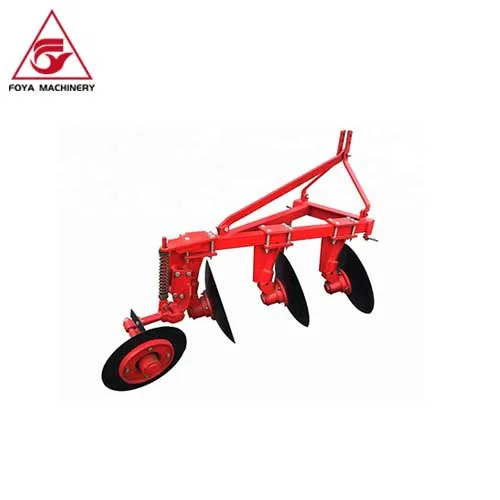
For reference, our tractor-mounted disc plough covers the 2-, 3- and 4-disc range in this table, and the cultivator range is specified on the same width-to-horsepower basis.
Soil Correction Factors
The chart above assumes medium loam. Real ground is rarely that cooperative. Multiply the base requirement by the factor for your dominant soil type, then round up to the nearest standard tractor size.
| Soil Type | Factor | What It Means in Practice |
|---|---|---|
| Sandy / sandy loam | 0.85 – 1.00 | Light draft; lower HP acceptable, but higher tyre slip on loose sand |
| Medium loam | 1.00 – 1.10 | Baseline for the implement chart above |
| Silt loam / alluvial | 1.10 – 1.20 | Sticky when wet, compacts easily — reduce passes |
| Clay loam | 1.20 – 1.30 | Noticeably heavier draft; step up one tractor class |
| Heavy clay / vertisol / black cotton | 1.35 – 1.50 | Highest draft; add ballast and consider one gear lower |
| Wet field (>15% slip expected) | +10 – 15% | Applied on top of the soil factor, not instead of it |
Example of the maths: a 2.4 m rotary tiller in heavy clay. Base requirement 65-85 hp, times a mid-range clay factor of 1.4, gives 91-119 hp. That is a 100-120 hp tractor, not the 75 hp machine that "looked big enough". This single calculation prevents more gearbox failures than any other step in the process.
Weight, Lift Capacity and the 80% Rule
Horsepower tells you what the tractor can pull. It says nothing about what the three-point hitch can lift — and a mounted implement that is too heavy causes steering loss, front-axle damage and rollover risk.
- Keep mounted implement weight at or below 80% of rated three-point lift capacity at the ball ends. The remaining 20% is your margin for muddy ground, side slopes and dynamic load transfer.
- Check front axle load. Most manufacturers specify a minimum front axle load (commonly 20-25% of tractor weight) when carrying a rear implement. If the front end goes light, add front ballast or move to a lighter implement.
- Transport is not working. A plough that lifts cleanly in the yard may not lift at road speed on a bumpy track. Lift capacity also falls as the oil warms — hydraulic pressure drops with temperature.
- Semi-mounted and trailed equipment transfers far less weight to the tractor, so a 4-disc plough may need a bigger tractor than its HP figure suggests simply because of the lift limit.
Tyre Pressure, Slip and Wet-Ground Losses
Power that never reaches the drawbar is irrelevant. On wet or loose ground, an incorrectly ballasted tractor can waste a quarter of its rated horsepower before the implement touches soil.
- Target 10-15% wheel slip in the field. Under 10% means you are carrying too much ballast and burning fuel lugging it around; over 20% means you are damaging soil and tyres.
- Each 10% of extra slip costs roughly 8-10% of drawbar power. Correcting tyre pressure for the load commonly recovers 10-20% of usable draft power at zero fuel cost.
- Wet ground raises rolling resistance significantly. Expect an additional 10-15% power requirement, and consider reduced tyre pressure (or duals/radials) rather than more horsepower.
- Deep ruts are a permanent tax. Working wet ground creates a compaction layer that needs extra power to break in every following season.
Three Symptoms of Underpowering — and the Fix
If any of these appear, you are asking too much of the tractor:
- Black smoke and falling rpm under load. The engine is at its fuel limit. Fix: reduce working depth by 3-5 cm, drop one gear and check the air filter — a clogged filter mimics underpowering exactly.
- Clutch slip or burning smell in 2nd/3rd gear. The driveline is being overloaded. Fix: reduce implement width (remove a disc or a tiller flange section) or upgrade the tractor. Continued use will require a clutch replacement.
- Slip above 25% with visible wheel spin. The tractor cannot convert power into draft. Fix: correct ballast and tyre pressure first — only then consider more horsepower.
Bad Pairings Seen in the Field
These combinations come up repeatedly in after-sales reports. They are worth more than any brochure specification.
| Tractor | Implement | Likely Failure | Correct Fix |
|---|---|---|---|
| 45 hp / 540 rpm | 2.4 m rotary tiller in clay | Engine lugging, clutch slip, tillage depth drops to 10 cm | Step to a 1.8 m tiller or an 80 hp+ tractor |
| 120 hp / 1000 rpm | 540 rpm implement with no speed reducer | Gearbox runs ~185% overspeed; failure within minutes | Fit a 1000→540 rpm reduction gearbox, or use an engine-speed PTO setting |
| 60 hp / 2,800 kg | 5-disc plough, 950 kg (lift rating 1,100 kg) | Front end light, steering loss, cracked lift arms | Use a 3-4 disc plough, or add substantial front ballast |
| 90 hp | 8 t manure spreader on wet ground | Slip above 30%, axle and tyre damage, incomplete spreading | Reduce load, work on drier ground, correct tyre pressure or use a 110 hp+ tractor |
| 35 hp compact | 1.2 m round baler | Cannot maintain chamber pressure, plugs constantly, PTO stalls | Minimum 45-55 hp for a 1.2 m chamber; use a smaller mini baler otherwise |
Six-Step Sizing Checklist
Run these steps in order before you commit to a purchase. They take ten minutes and prevent most ownership problems.
- Identify your soil type and correct the base HP. Start with the implement chart, then multiply by the soil factor and add 10-15% if you work wet ground.
- Confirm the PTO standard. Match 540 rpm implements to 540 rpm tractors. If your tractor is 1000 rpm only, budget for a reduction gearbox from the start.
- Verify the implement runs at rated PTO speed. Check that the recommended engine rpm actually delivers 540 rpm at the shaft — this is where mowers and balers are most often let down.
- Check three-point lift and weight distribution. Mounted implement weight should be 80% or less of rated lift capacity, with enough front axle load to steer safely.
- Assess ground conditions and field size. Small, wet or sloped fields favour a smaller, lighter implement worked at reduced depth over a larger one that cannot be used half the season. Our round baler range, for example, is specified by chamber size against minimum tractor horsepower for exactly this reason.
- Test, then adjust. Work one pass at the recommended depth and speed, then measure wheel slip and check exhaust colour. Adjust ballast and tyre pressure before you decide the pairing is wrong.
Frequently Asked Questions
How do I calculate the PTO horsepower my implement needs?
Use the draft formula: required PTO horsepower is roughly draft force (kN) multiplied by working speed (km/h) divided by 3.6, then divided by 0.75 to account for driveline losses. In practice most buyers use an implement width chart instead: a 2 m rotary tiller needs 45-60 PTO hp in loam, a 3-disc plough needs 50-65 hp, and a 1.2 m round baler needs 45-55 hp. Add the soil correction factor for your ground before deciding.
What is the difference between 540 and 1000 rpm PTO?
540 rpm is the standard PTO speed for small and medium tractors up to about 100 hp, and it drives most tillage, seeding and baling implements. 1000 rpm PTO is used on larger tractors because it transmits the same power at lower torque, allowing a thinner and cheaper shaft. The two are not interchangeable: a 540 rpm implement driven at 1000 rpm runs at roughly 185% of its design speed and will destroy gearboxes within minutes.
Can I use an implement that is too big for my tractor?
You can sometimes pull an oversized implement in light soil at reduced depth, but you should not plan to. A chronically overloaded tractor shows up as high fuel consumption per hectare, black exhaust smoke, rising coolant temperature, clutch slip in 2nd and 3rd gear, and accelerated PTO clutch wear. If you must work undersized, run one gear lower and reduce working depth rather than pushing the engine to its torque limit.
How much weight can my three-point hitch lift safely?
Keep the mounted implement weight at or below 80% of the tractor's rated three-point lift capacity at the ball ends. The remaining 20% is your margin for wet soil, sloping ground and dynamic load transfer during lifting. You should also confirm the front axle stays loaded — a rear-heavy tractor with a light front end loses steering authority on hills and at road speed.
How much extra power do I need for heavy clay or wet ground?
Apply a soil correction factor on top of the base implement requirement: about 1.0 for sandy loam, 1.0-1.1 for medium loam, 1.2-1.3 for clay loam and 1.35-1.5 for heavy black or vertisol clay. Add a further 10-15% if the field is wet and you expect more than 15% wheel slip, because slip converts engine power into tyre wear instead of draft.
Does tyre pressure and wheel slip really change power requirements?
Yes, significantly. Every 10% of wheel slip wastes roughly 8-10% of the power delivered to the drawbar. Correct ballasting and tyre pressure for the load typically recover 10-20% of effective draft power at no fuel cost. On wet ground, over-inflated tyres can push slip above 25%, at which point the tractor is digging holes rather than pulling the implement.
Match Your Tractor Before You Buy the Implement
Send us your soil type, field size and tractor model, and FOYA Machinery will give you a concrete implement recommendation with the correct working width and PTO horsepower range — before you place an order, not after a gearbox fails. We ship to more than 50 countries with factory-direct pricing, spare parts support and technical documentation for every machine.
Tell us how many hectares you work, what your soil is like, and whether your tractor is 540 or 1000 rpm PTO. That is enough for a precise match. Browse our cultivator range for the secondary tillage sizes referenced above, or contact us for a full pairing list.
Send your tractor model and soil type for a free implement sizing recommendation.