You have found the machine you need, the price looks reasonable, and the salesperson answers every message within minutes. That is exactly the point at which a first-time buyer from Africa, Southeast Asia or South America is most exposed — because nothing in that picture actually proves the seller owns a factory, builds the machine they are describing, or has ever exported it before. Verifying a supplier is not a matter of distrust; it is the same discipline you apply when buying a used tractor from a stranger.
This guide is written for small farm owners and first-time traders placing their first import order. It sets out why this trade attracts risk, the seven red flags that separate a real manufacturer from a middleman, the precise questions that force a straight answer, a 20-point factory verification checklist, the document pack you should demand, and how a small trial order limits your exposure while you learn who you are dealing with.
1. Why This Trade Is Riskier Than It Looks
Agricultural machinery sits at an awkward intersection for overseas buyers. The machines are heavy, so freight is expensive and rarely worth returning; the sector is fragmented, so hundreds of small workshops and trading offices compete for the same search terms; and the buyer is often thousands of kilometres away, judging by photographs. That combination creates three recurring problems:
- Traders presenting themselves as factories. A sales office with a rented showroom can look identical online to a plant with 200 workers. The margin between "manufacturer price" and "trader price" is real, but so is the service gap when something breaks.
- Refurbished machines sold as new. Stripping, repainting and re-plating a used machine is cheap and, in a photograph, almost invisible. Worn bearings, stretched belts and a repaired frame only reveal themselves under load.
- Inflated specifications. Capacity figures in particular are frequently quoted at the theoretical maximum rather than the realistic working rate, and a "4 kW" motor on paper can arrive as a 2.2 kW motor on the nameplate.
None of this means every supplier is dishonest. It means the burden of proof sits with the buyer, and proof is easy to demand before the deposit leaves your account — and almost impossible to recover afterwards.
2. The 7 Red Flags at a Glance
Use this table as a screening filter. One flag is a question worth asking; three or more in a single conversation is a strong signal to walk away.
| Red flag | Why it matters | What to ask |
|---|---|---|
| 1. Refuses a video factory tour | Anyone can photograph a factory; only someone standing in it can walk it live. | "Can we do a live video call now, walking through the assembly line to the machine you are quoting?" |
| 2. No workshop footage — only a product photo gallery | Stock images and catalogue renders are the standard substitute when there is no floor to film. | "Send a 60-second clip filmed today showing the model I am buying, with today's date visible." |
| 3. Price far below the market | Something was removed to reach that number — steel thickness, motor rating, gearbox quality, or the warranty. | "What exactly is different in this build compared with your standard model? Put the steel gauge and motor rating in writing." |
| 4. No business licence or export qualification | Company documents are the difference between a legal entity and a phone number. | "Please send your business licence with the unified social credit code, and your export licence or your agent's." |
| 5. Payment only by irreversible transfer to a private account | Money sent to an individual leaves no contractual trail and cannot be recalled. | "Will you issue a Proforma Invoice on company letterhead with a company bank account matching the company name?" |
| 6. No previous shipping records or bill of lading sample | Export history is the cheapest proof of competence — and the hardest to fake consistently. | "Send two Bill of Lading samples for this model, plus container loading photos and the ports you ship from." |
| 7. Avoids warranty and spare-parts commitments | Machines fail; the question is who answers when yours does. Vagueness here predicts the after-sales experience. | "What is the warranty period, which parts are covered, and how do I order a replacement bearing or belt within 12 months?" |
3. Reading Each Red Flag Properly
Flag 1 — Refusing a live video factory tour
This is the single most useful test available to a remote buyer, and it costs the seller fifteen minutes. A genuine manufacturer will walk you past the welding bays, the assembly line and the finished-machine yard, and will happily point the camera at the machine you are discussing. Excuses cluster predictably: unstable network, workshop confidentiality, "our factory is 200 km away", or an offer to send photos instead. Photos are not a substitute. If a live tour is genuinely impossible, ask for a recorded walk-through filmed on the same day, with a newspaper or phone clock in frame.
Flag 2 — No real workshop footage, only a product gallery
Catalogue renders, watermarked stock photos and images recycled from other suppliers' websites are a well-known symptom. Test it directly: ask for a short clip of the exact model being run, filmed that day, including the machine's nameplate or serial plate. A factory can do this in ten minutes because the machine is standing on its floor. A trader has to phone someone else — and that delay, or a sudden rush of excuses, is your answer.
Flag 3 — A price far below the market
A genuinely competitive factory price is 5–15% below a trader's. A quote 30% or more below everyone else for the same stated specification usually means the specification is not the same. The usual substitutions are thinner body steel, a cheaper or smaller motor, a lower-grade gearbox, simplified hydraulics, or removal of the warranty and spare-parts commitment. Do not reject the quote — interrogate it. Ask what was changed to reach the price, and insist the answer is written into the Proforma Invoice.
Flag 4 — No business licence or export qualification
Every legitimate Chinese company holds a business licence showing the unified social credit code, the registered address and the legal representative. Export capability is separate: either the supplier holds an export licence, or it works through a named licensed trading agent. Both are acceptable, but both must be disclosed. Compare the company name on the licence with the name on the invoice and on the bank account — when those three do not match, you are not dealing with one accountable entity.
Flag 5 — Payment only to an irreversible private account
Requests to pay an individual's personal account, a third-party account, or in cash via an intermediary are among the clearest warning signs in the whole trade. They remove the paper trail that ties your money to a company that can be held responsible. The safe structure is unglamorous: a Proforma Invoice on company letterhead, a company bank account whose name matches the company on the licence, and a normal split such as 30% deposit with the balance against a copy of the Bill of Lading.
Flag 6 — No shipping records or Bill of Lading samples
Ask which ports the supplier ships from, how many containers of this model went out in the last twelve months, and which freight forwarder they work with. Then ask for two Bill of Lading samples for the same model, with the consignee details blurred if privacy requires it, plus container loading photographs. Real exporters answer immediately, because those documents live in their inbox. Suppliers with no export history change the subject or send a generic "we export worldwide to over 50 countries" line with nothing behind it.
Flag 7 — Avoiding warranty and spare-parts commitments
The sale does not end at the container. Ask precisely: how long is the warranty, which components does it cover, are wearing parts excluded, how is a replacement dispatched, and what does a spare-parts kit for the first two years cost. A supplier who quotes a specific warranty period, names the covered components and can price a spare-parts kit within the hour is telling you they have handled after-sales before. A supplier who answers "no problem, we will support you" has told you nothing you can hold them to.
4. The 20-Question Factory Verification Checklist
Send these in one message and ask for written answers. The quality of the response — specific, documented, fast — matters as much as the content.
| # | Question to ask | What a good answer looks like |
|---|---|---|
| 1 | What is your full registered company name? | Matches the name on the business licence and invoice |
| 2 | Are you the manufacturer or a trading company? | A direct answer, with the factory address if applicable |
| 3 | What is the factory address, and can we see it live on video? | An address plus a scheduled live walk-through |
| 4 | How many employees work on production? | A specific number, consistent with the video |
| 5 | When was the company founded? | A date matching the licence and the story |
| 6 | Which models do you build in-house and which do you buy in? | An honest split — no manufacturer makes everything |
| 7 | What is the steel plate thickness of the main frame? | A figure in millimetres, quotable and checkable |
| 8 | What is the exact motor rating and brand? | A rating and brand that match the nameplate photo |
| 9 | Which gearbox and bearing brands do you fit? | Named brands, not "high quality" |
| 10 | Will the quotation state every specification in writing? | Yes, on the Proforma Invoice |
| 11 | Is the machine I am buying newly built or refurbished? | "New", with a production date and serial number |
| 12 | Can you send a same-day video of the machine running? | A clip with a visible date or nameplate |
| 13 | How many units of this model have you shipped in the last 12 months? | A number, ideally with destination countries |
| 14 | Which ports do you ship from, and with which forwarder? | Named ports and a named forwarder |
| 15 | Can you show a Bill of Lading sample for this model? | Documents sent without delay |
| 16 | How is the machine packed, and will you send a loading video? | Steel frame or crate plus a filmed loading |
| 17 | What is the warranty period and what does it cover? | Specific months and named covered parts |
| 18 | What does a two-year spare-parts kit cost and include? | An itemised list with prices |
| 19 | Which CE or ISO certificates do you hold, and do they name this model? | Certificates naming the product and holder |
| 20 | Will you accept a small trial order before a bulk purchase? | Yes, with the same documentation as a large one |
5. The Document Pack a Qualified Supplier Should Provide
Before the deposit, a serious supplier should be able to send all of the following without being pushed twice. Keep them together — they form your file if anything goes wrong.
| Document | What it proves | What to check on it |
|---|---|---|
| Business licence | That a legal company exists and is accountable | Registered name, unified social credit code, registered address, legal representative |
| Export licence (or the agent's licence) | That the seller may legally export your order | Holder name matches the licence and invoice; agent named in writing |
| CE / ISO 9001 or equivalent certificates | That the product is certified, not just advertised as such | The certificate names your product family and the holder — not a generic scan |
| Proforma Invoice | That price, model and specification are fixed on paper | Company letterhead, itemised specs, packing, delivery term, matching bank name |
| Container loading video and photos | That your machines, and not others, were shipped | Your serial plates visible, filming inside the container, dated |
| Warranty terms and spare-parts list | That after-sales support is a commitment, not a courtesy | Warranty period, covered components, spare-parts prices in writing |
If a supplier is willing to send all six, you have a partner to negotiate with. If two or three of them are "not available right now", you have learned something valuable at very low cost — and you have not yet sent any money.
6. The Verification Decision Flow
Work through these steps in order. Stop at the first hard failure and re-evaluate; do not let a good price pull you past a red flag.
- Screen the contact. Ask for the business licence and the manufacturer-or-trader answer. → Company confirmed?
- Run the live tour. Request a video walk-through of the workshop and the exact machine. → Floor confirmed?
- Interrogate the specification. Get steel gauge, motor rating, gearbox and bearing brands in writing. → Spec confirmed?
- Pressure-test the price. Ask what was changed to reach a below-market number. → Value confirmed?
- Demand the export evidence. Bill of Lading samples, ports, forwarder and loading photos. → History confirmed?
- Lock the paperwork. Proforma Invoice, warranty terms and spare-parts prices in writing. → Terms confirmed?
- Confirm the payment route. Company account matching the company name; no private accounts. → Route confirmed?
- Place a trial order. One or two units, full documentation, inspect on arrival. → Performance confirmed?
- Scale up. Only after the trial machines have completed a real working cycle and after-sales has been tested once.
7. Why a Small Trial Order Is Worth the Freight
A trial order feels inefficient: you pay nearly the same freight for a fraction of the volume, and you wait the same weeks. In exchange, you convert a set of promises into machines you can inspect, run and measure. Do it deliberately. Specify that the trial unit carries exactly the same specification, warranty and documentation as a bulk order — this is where weak suppliers quietly try to substitute. Film the container loading at their end and the unloading at yours. Run the machine through a full working cycle with your own material, and check the three things photographs never reveal: the steel thickness, the motor nameplate and the warm-running noise of the gearbox.
Then test the after-sales claim once on purpose. Order a spare part. A supplier who ships the right bearing in a reasonable time has proven the warranty means something; the one who stops replying the moment the balance is settled has proven the opposite, for the price of a single machine rather than a container load. Whether you are buying a grain sheller, a feed pellet machine or a hammer crusher, the verification sequence is the same, and it protects your capital far more effectively than any discount.
Frequently Asked Questions
How can I tell a factory from a trading company?
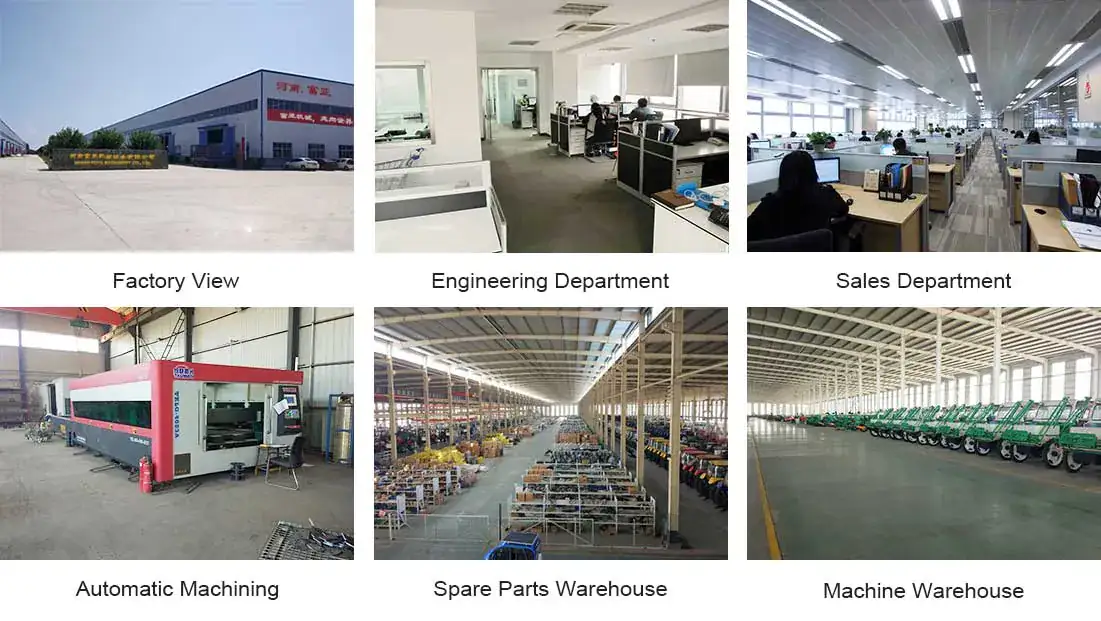
Ask for a live video call walking through the workshop, not a photo pack. Then cross-check the company name on the business licence against the name on the invoice, the export licence and the bank account. A real manufacturer will happily show you the production line, the spare-parts warehouse and the machinery on the shop floor. A trading middleman usually cannot, because there is no floor to show.
Is a price far below everyone else always a scam?
Not always — but a quote 30% or more below the market for the same model and specification needs a written explanation. Ask what was removed to reach that price: thinner steel plate, a smaller motor, a low-grade gearbox, no warranty, or a refurbished frame. Cheaper is usually lighter, not better. Get the steel thickness, motor rating and gearbox brand in writing before you accept the number.
What documents should a machinery supplier give me before I pay?
A business licence, an export licence (or a named licensed export agent), CE or ISO certificates that actually name the model you are buying, a Proforma Invoice on company letterhead with the bank account matching the company name, the agreed warranty terms in writing, and a promise of a container loading video. If any one of these cannot be produced, treat it as a warning rather than a formality.
Which payment method protects me best?
Pay to a company account in the name of the company that issued the Proforma Invoice — never to a personal account, and never in cash to an individual. For a first order, a 30% deposit with the balance against a copy of the Bill of Lading is a common and fair structure. A transfer to a matching company account gives you a paper trail; an irreversible transfer to a private individual gives you almost nothing.
What is the safest way to place a first order?
Start small. Order one or two units of the model you need, run them through a full working cycle, and only then scale up. A trial order costs you a little freight and some time, but it lets you verify build quality, packing, documentation and after-sales response with real machines instead of promises. Suppliers who resist a trial order are telling you something.
How do I check a supplier's past shipments?
Ask for Bill of Lading samples from previous exports of the same model, with the consignee details blurred if necessary, plus container loading photos. Ask which ports they ship from and which forwarder they use, then compare the answers with the nameplate and photos of the unit being offered. A supplier with genuine export history can produce this in minutes; one without will change the subject.
Verify First, Buy Second
If you are preparing a first machinery import and want a supplier who will open the workshop on a video call, name the steel gauge, show a Bill of Lading from a previous shipment and accept a trial order, the FOYA team works this way every day. Tell us the machine you need, your farm size and your port, and we will send the specification, the certificates and a Proforma Invoice with every figure written down — so you can verify the supplier before you commit a single dollar.
Contact us for factory verification documents, specifications and trial-order pricing.