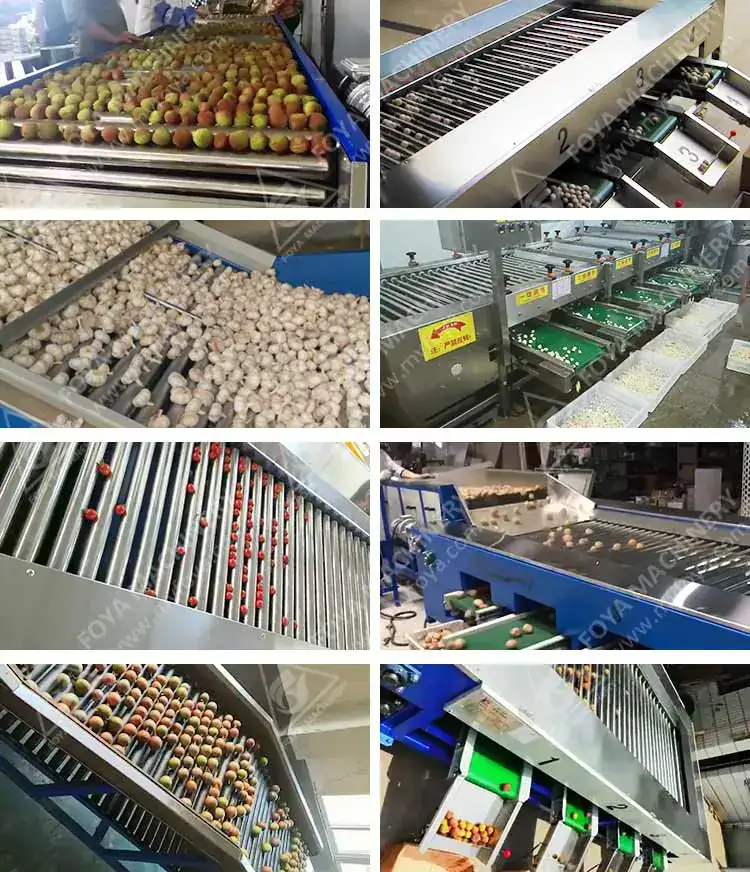
Selling fresh produce that is consistently sized is one of the fastest ways to raise your price per kilogram. Whether you pack apples and citrus for retail, grade potatoes and onions for processing, or sort tomatoes and peppers for a supermarket contract, a fruit vegetable grader turns a tedious manual job into a fast, repeatable, high-volume operation. This guide walks through the two main grader technologies, how to size capacity and grade count, material and hygiene considerations, and realistic 2026 pricing so you can choose the right machine for your packing line.
Why Grading Matters in Food Processing
Produce that arrives at a packinghouse always varies in size. Customers — whether retail chains, processors, or export buyers — pay a premium for uniform product, and they reject mixed lots. A grader sorts incoming fruit and vegetables into defined size or weight categories at high speed, protecting both your yield and your reputation.
- Higher selling price — uniform grades command premium pack prices
- Labour savings — one machine replaces 3-6 manual sorters
- Consistent quality — every grade matches the customer specification
- Less bruising — automated handling is gentler than repeated hand grading
- Traceability — weight/vision graders can record counts per batch
Roller Grader vs Weight Grader
Two technologies dominate the market. Understanding which one suits your crop is the single most important buying decision.
| Feature | Roller Grader (Size/Roller Sizer) | Weight Grader |
|---|---|---|
| Sorting Principle | Width/diameter via expanding roller gaps | Weight on individual cups or scale heads |
| Best For | Apples, citrus, potatoes, onions, tomatoes, garlic | Avocados, mangoes, melons, peaches, irregular shapes |
| Capacity | 500 - 10000 kg/h, generally high | 1000 - 10000 kg/h depending on heads |
| Grades | 3 - 8 size channels | 4 - 16 weight categories |
| Accuracy | Good for diameter, not for density | Very high, weighs each piece |
| Typical Price | $1,500 - $18,000 | $20,000 - $80,000+ |
Most round, uniform crops — the classic food-processing tiers — are very well served by a roller grader. It is simpler, cheaper, and easier to wash down. If you regularly handle odd shapes or need certified weight classes for export, budget for a multi-head weight grader.
Capacity Sizing Guide
| Operation Size | Typical Capacity | Number of Grades | Best Machine Type |
|---|---|---|---|
| Small farm / packing stand | 500 - 2000 kg/h | 3 - 5 | Compact roller grader |
| Co-op / regional packinghouse | 2000 - 5000 kg/h | 5 - 8 | Mid-size roller or belt grader |
| Large commercial packhouse | 5000 - 10000 kg/h | 6 - 9+ | Multi-head weight / vision line |
| Processing plant (juice/can/process) | 3000 - 8000 kg/h | 3 - 4 (processable) | High-throughput roller grader |
A reliable sizing rule is to pick a grader with about 20-30% more capacity than your current peak throughput. That headroom absorbs harvest-day surges and feeding inconsistencies without forcing the line to stop, without paying for a huge machine you will rarely use.
Choosing the Number of Sorting Grades
The grade count should mirror your actual market requirements, not a marketing specification. Sit down with your buyer contracts first and count the distinct size/weight categories you genuinely sell.
| Crop Example | Common Grade Count | Typical Grade Sizes |
|---|---|---|
| Apples | 5 - 6 | Extra Small to Extra Large (e.g. 60-90 mm) |
| Citrus (oranges) | 6 - 8 | 50 - 110 mm diameter bands |
| Potatoes | 4 - 5 | Small (process), Medium, Large, Jumbo |
| Tomatoes | 4 - 6 | Diameter or weight classes |
| Onions / garlic | 3 - 5 | 20 - 100 mm size bands |
Every additional grade channel adds a small cost to a roller grader and a larger cost to a weight grader. If you currently ship two or three sizes plus culls, start there — you can usually add channels later on a modular machine.
Materials, Hygiene and Durability
Grading sits directly in the food-processing flow, so build quality and washdown matter as much as capacity.
- 304 stainless steel on product-contact surfaces prevents corrosion and is easy to sanitise
- Food-grade rubber or nylon rollers avoid scratching soft fruit and resist everyday washdown
- Self-cleaning frame — fewer horizontal ledges mean less debris build-up between runs
- Gentle infeed — simple drop-in or padded infeed reduces bruises on delicate crops
- Adjustable roller spacing — lets you switch crop types quickly on the same machine
If your packhouse is certified (HACCP, BRC, or similar) or exports to strict markets, confirm the whole machine can be washed down safely each day and that consumable rubber parts are easy to source.
2026 Fruit Vegetable Grader Price Guide
| Grader Class | Capacity | Grades | Price Range (USD) |
|---|---|---|---|
| Compact roller grader | 500 - 2000 kg/h | 3 - 5 | $1,500 - $6,000 |
| Mid-size roller grader | 2000 - 5000 kg/h | 5 - 8 | $6,000 - $18,000 |
| Multi-head weight grader | 3000 - 8000 kg/h | 8 - 16 | $20,000 - $80,000 |
| Vision-based automated line | 5000 - 10000 kg/h | 8 - 20 | $50,000 - $200,000+ |
FOYA fruit vegetable graders are built in food-grade stainless steel with gentle rubber roller systems, adjustable spacing, and straightforward washdown access. Factory-direct pricing includes worldwide shipping arrangements and technical support to help you integrate the grader into your existing washing and packing line.
Frequently Asked Questions
What is the difference between a roller grader and a weight grader?
What capacity fruit vegetable grader do I need?
How much does a fruit vegetable grader cost in 2026?
How many sorting grades do I need on a grader?
Which materials should a food-grade vegetable grader use?
Ready to Buy a Fruit Vegetable Grader?
FOYA Machinery offers fruit and vegetable graders from compact 500 kg/h roller models to high-head weight and vision lines, built for gentle, hygienic sorting of apples, citrus, potatoes, onions and more. Every unit uses food-grade stainless steel, adjustable roller spacing, and easy washdown access. Contact our team for help sizing the right grader for your crop, line speed, and packing requirements.
Also explore: Fruit Vegetable Grader product page | Fruit Vegetable Washer Buying Guide | Brush Vegetable Washer Buying Guide